CATCH THE DRAGON
Catch the Dragon was my first professional title, started as a Level Design intern in 2019 and continued in-house with a broader scope across game design. A team-vs-team location-based VR arena game built for free roaming venues, tracked by a warehouse-scale positional system. Across the production I shipped 4 maps on 2 game modes: three 3v3 Capture the Flag arenas and one Wagon Defense map, deployed in partner venues running 200m² to 400m² of play surface in Dardilly and Bourgoin-Jallieu.
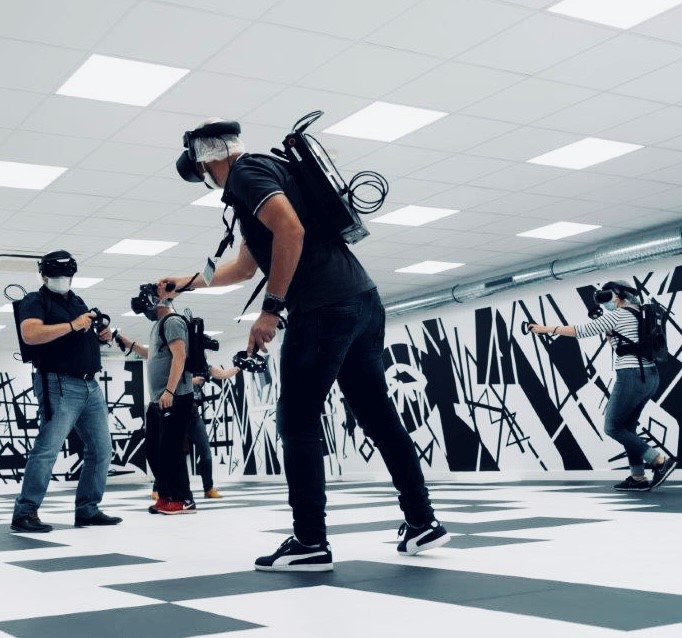
Free roaming changes the design problem entirely. No stick, no teleport, no virtual sprint: the player's body is the controller. Sightlines, paths and combat zones have to read from the body's point of view, and every encounter has to keep teams apart in physical space before keeping them apart in tactical space.
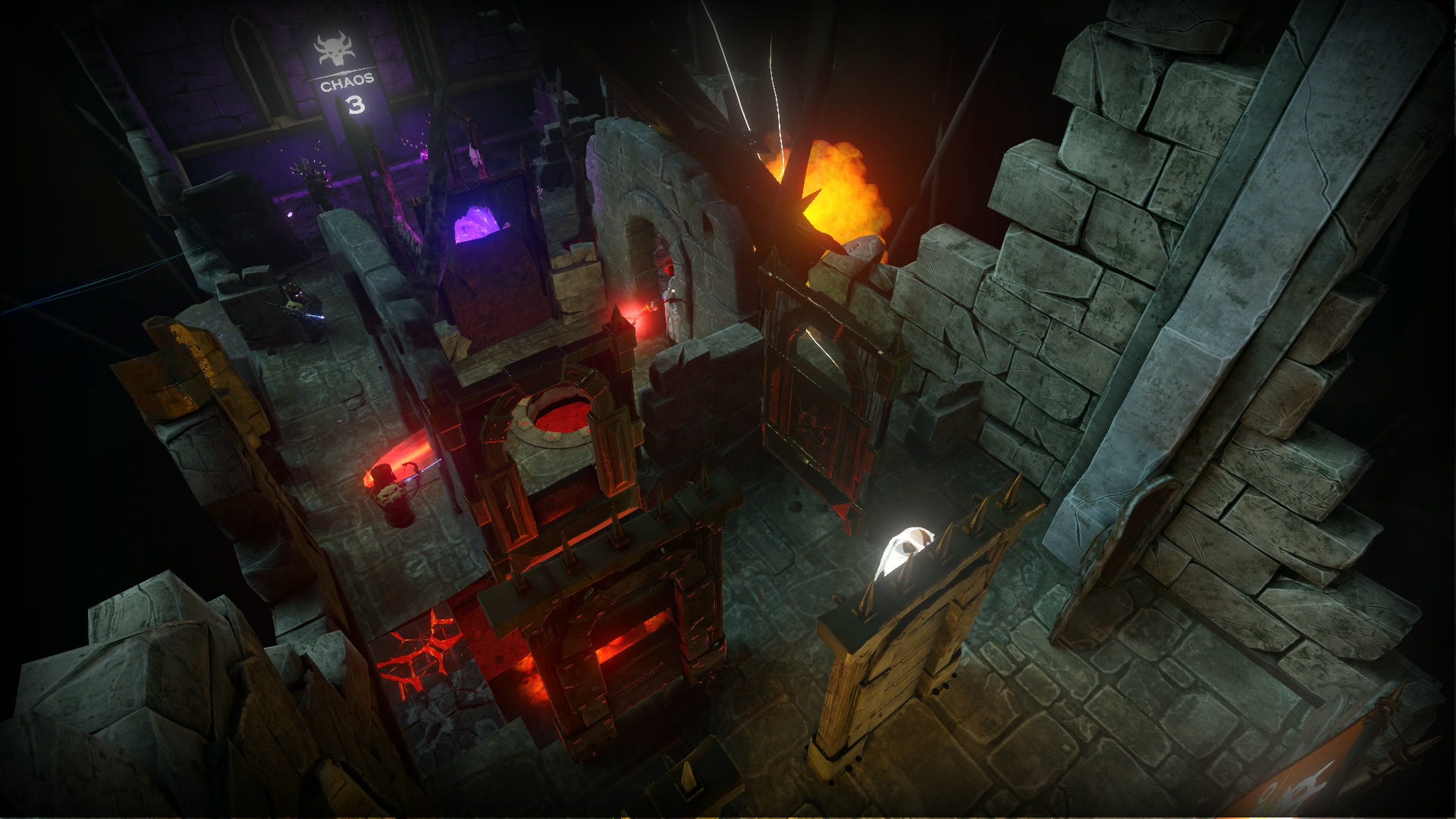
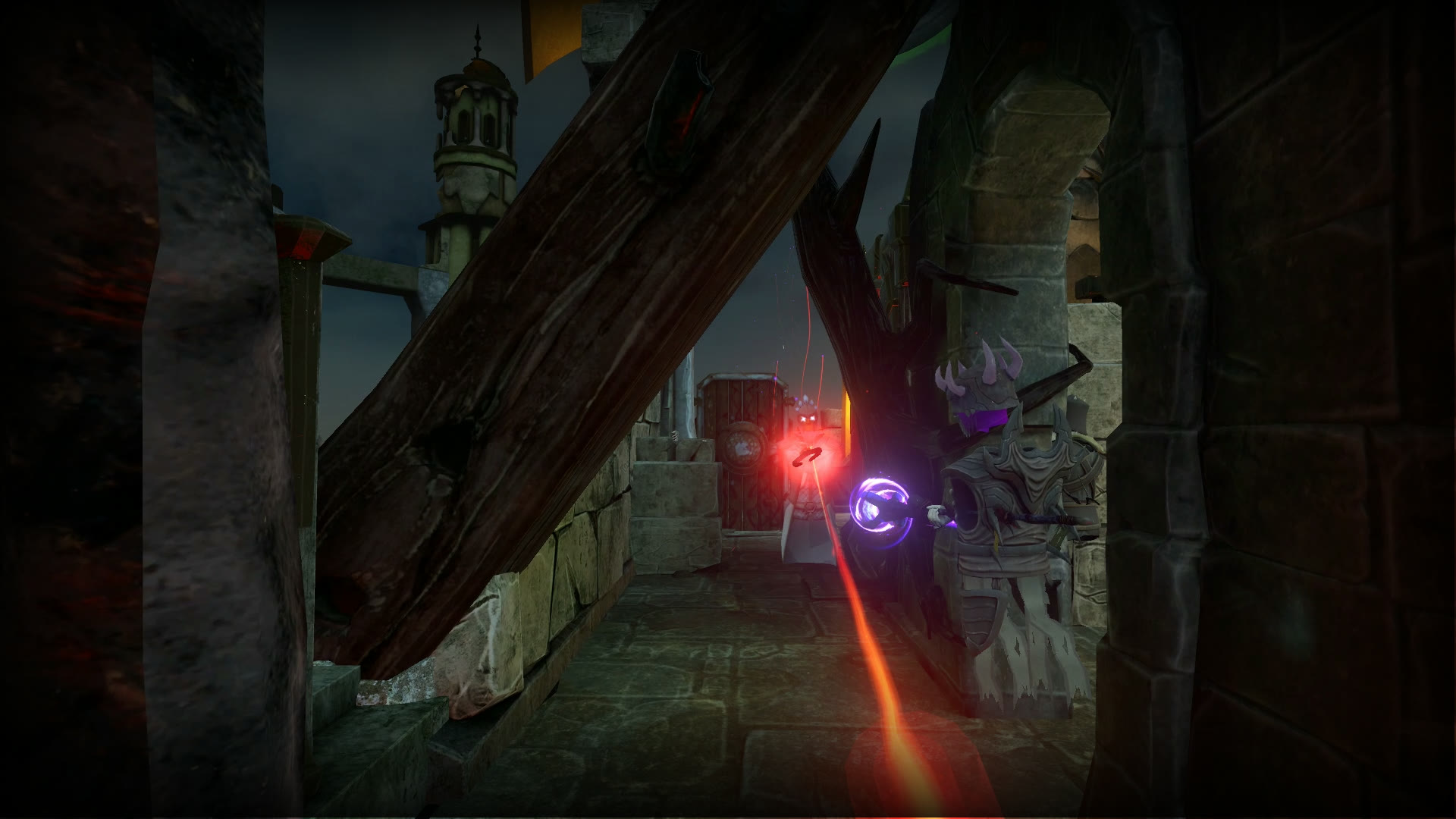
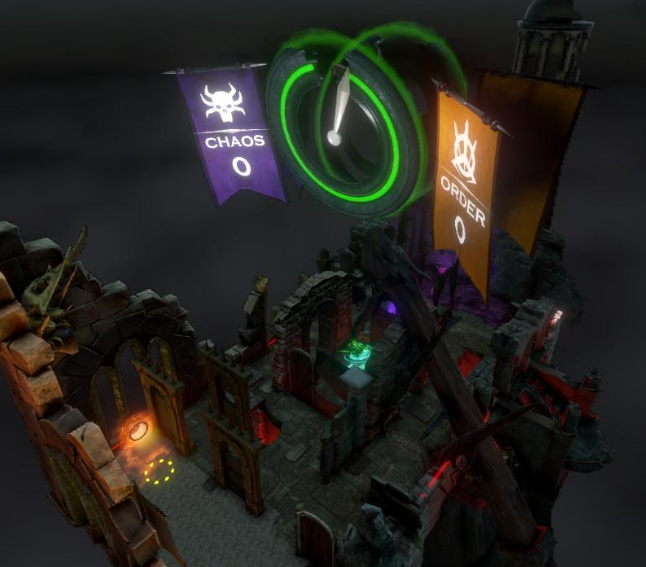
Level design
Level design is the heart of this project and the angle I came in on. Designing for free roaming means designing at 1:1 physical scale: the player moves with their actual body, not a stick. That single constraint reshapes every primitive of the craft.
- No narrow back-and-forth corridors. The Bourgoin-Jallieu room is only 8 metres wide, which makes a classic 4v4 capture-the-flag impossible without physical traffic jams
- No traversable walls, no jumping, no falling. Any "fall" is a scripted life loss, never a real drop, so the player never walks toward a virtual void that is also a real wall
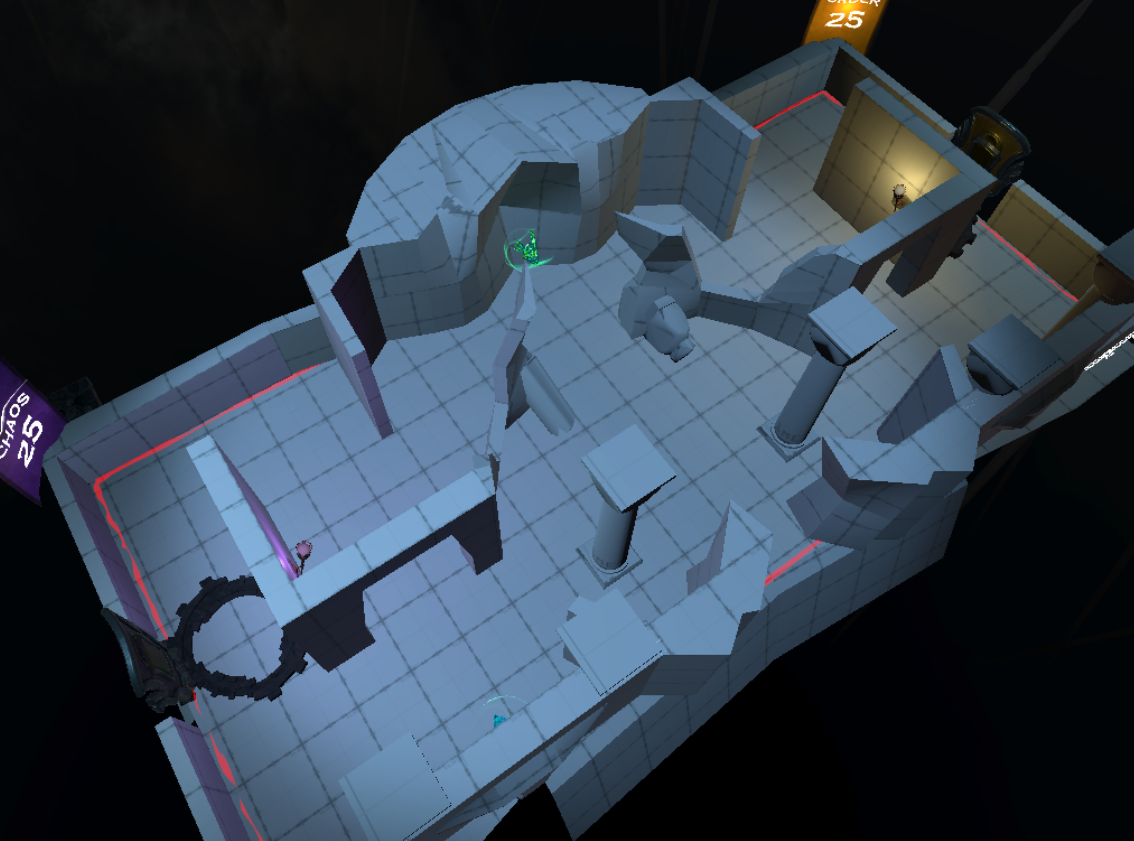
- Sightlines and paths have to be readable from the body's point of view, not the camera's. What feels clear in a top-down blockout often collapses once a player is physically in the space
Every map went through a tight duo loop with a dedicated Level Artist. Layouts were drafted as annotated top-down passes, then turned into Unity blockouts and dressed by the LA, with continuous round-trips on what stayed legible (sightlines, capture zones, cover, breakables) versus what could be pushed into set dressing and niche storytelling. Working in that duo is where a lot of my LD vocabulary settled, in particular the cover / window / breakable primitives I still use as layout building blocks.
Testing a free roaming map is not a Play-button affair. Each iteration meant deploying the build to the backpacks worn by players, recalibrating the Windows Mixed Reality headsets so the room boundaries displayed correctly, gearing up, and playing the full round physically in the venue. One bad calibration and a player walks into a real wall.
That loop is slow and expensive, which forces a discipline I have kept since: every iteration has to be justified in writing before it is built, because you cannot iterate your way out of free roaming the way you can in seated VR. Cheap iterations make sloppy designers; expensive ones make precise ones.
The Bourgoin-Jallieu space went through several layout passes as we sized maps from 200m² up to 400m², testing single dropzone versus multiple-artefact configurations, relay maps, and varying spawn placements. Free roaming arena pacing is a balance between giving teams the room to spread out and forcing meaningful contact, and that balance shifts with every metre of play surface.
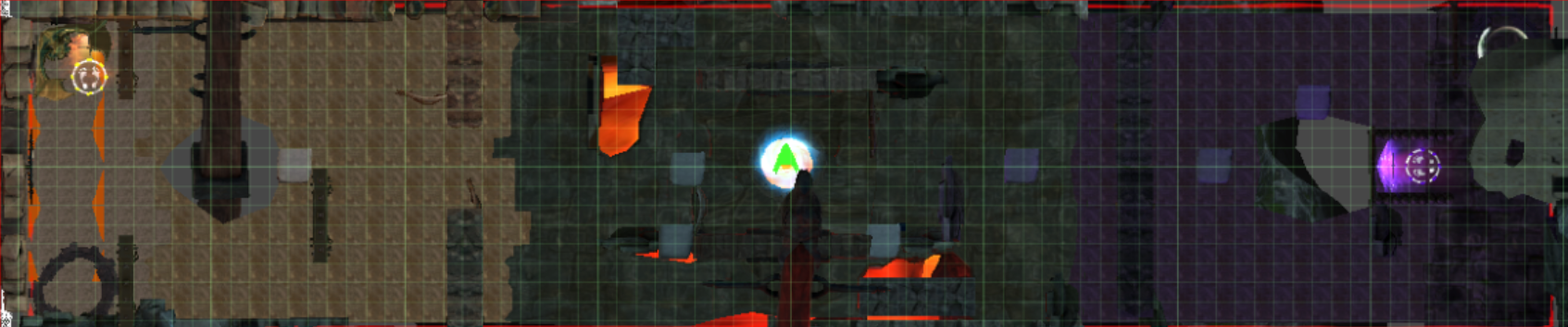
- Designed 4 maps across 2 game modes (3v3 Capture the Flag, Wagon Defense)
- Worked at 1:1 physical scale in venues from 200m² to 400m²
- Iterated map layouts in tight LD/LA loops with a dedicated level artist
- Validated each iteration through on-site physical playtests: build deployment, headset calibration, full play loops
- Designed sightlines, capture zones, and dragon-tear hazard placement to keep teams spread out without forcing physical collisions
Game design
I joined as a Level Design intern, was recruited in LD, then grew into the game design side of the production. The systems below are the ones I tuned and balanced once that scope opened up: a junior-to-mid growth that happened on shipped maps and shipped mechanics.
Dragon tears are environmental crystals that explode in an AoE when shot or touched, then respawn on a timer. They sit halfway between hazard and weapon: the LD places them at sightline crossings and chokepoints, and players learn to use them as area denial, zone control, or improvised traps. That overlap of level prop and player tool is what turns them into emergent encounters rather than static obstacles.
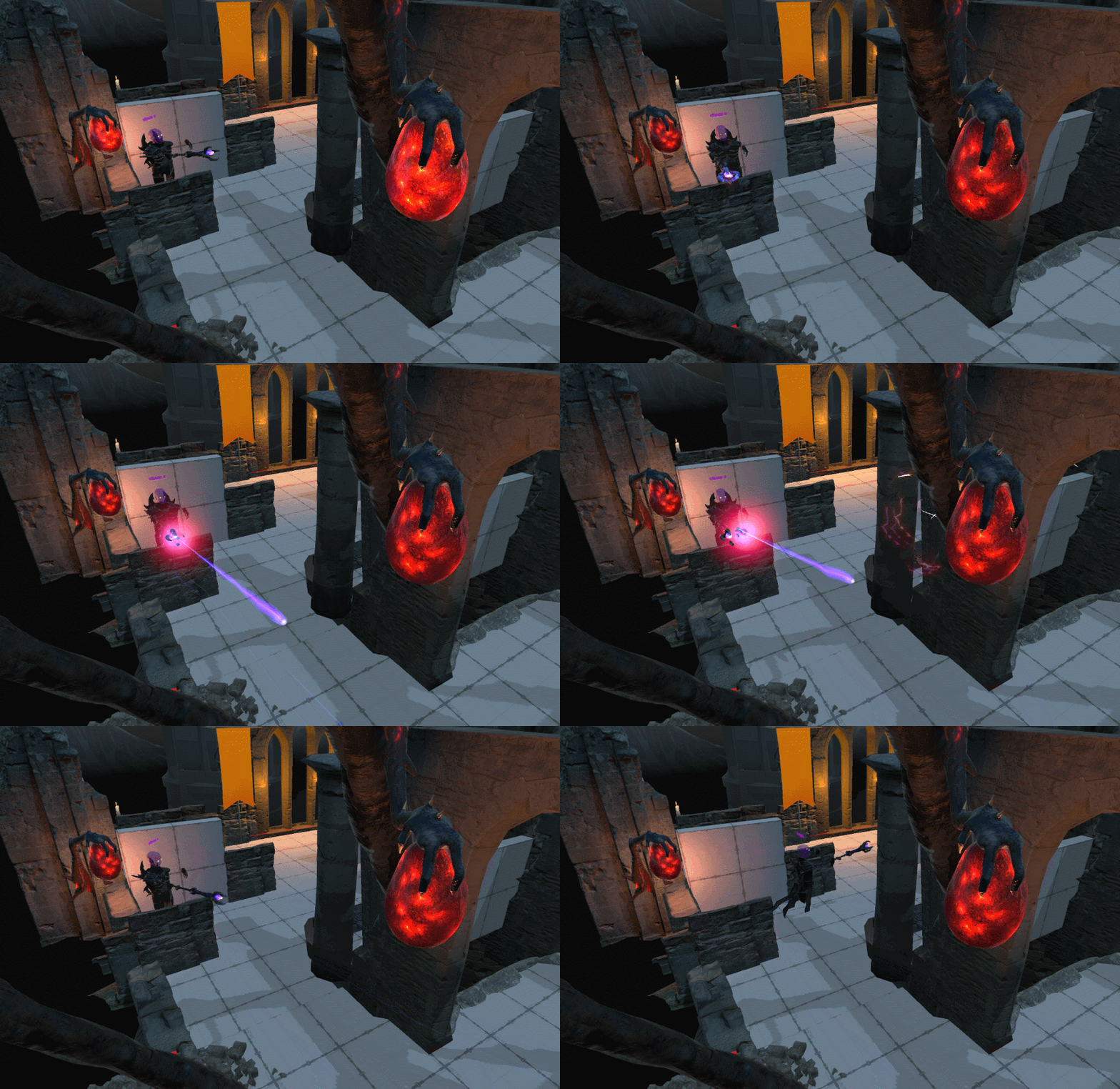
Mage and Archer are deliberately built around different physical gestures. The Mage charges an energy ball by holding the trigger, the longer the charge the bigger the ball, and those projectiles bounce off walls, opening up indirect angles and corner plays the Archer cannot access. The Archer draws the bow with two hands, with a physical pull on the string. Same role in the team economy, opposite body language, balanced on time-to-kill and effective range.
- Integrated dragon tears as environmental hazards that double as tactical tools
- Balanced two complementary classes (Mage, Archer) around distinct physical gestures
- Tuned round length and pacing to the 15-20 minute venue billing window