DARKENSUM
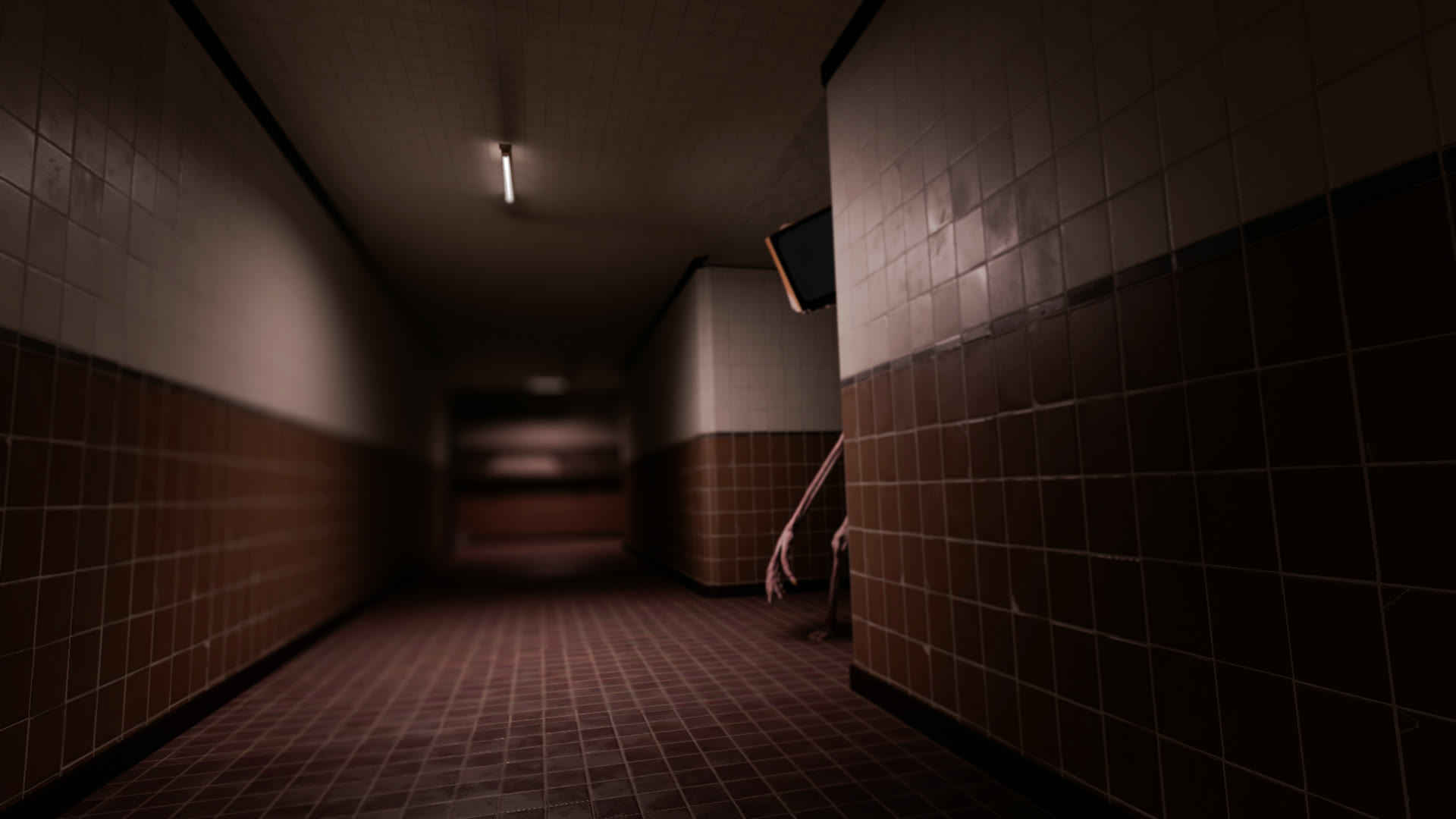
A VR horror experience set in the incoherent floors of a shopping mall frozen outside of time. Players are cleaning crew employees trapped in a malfunctioning elevator, transported across thematic floors in a Liminal Space atmosphere, hunted by TV Head, a creature with a television for a head. Their only contact: Dean, a security agent guiding them from outside. The design brief: build dread without leaning on jumpscares.
Lead Game Designer
- Owned the product vision for an accessible horror experience targeting non-horror audiences: 13+ arcade walk-in clientele, including first-timers and casual groups
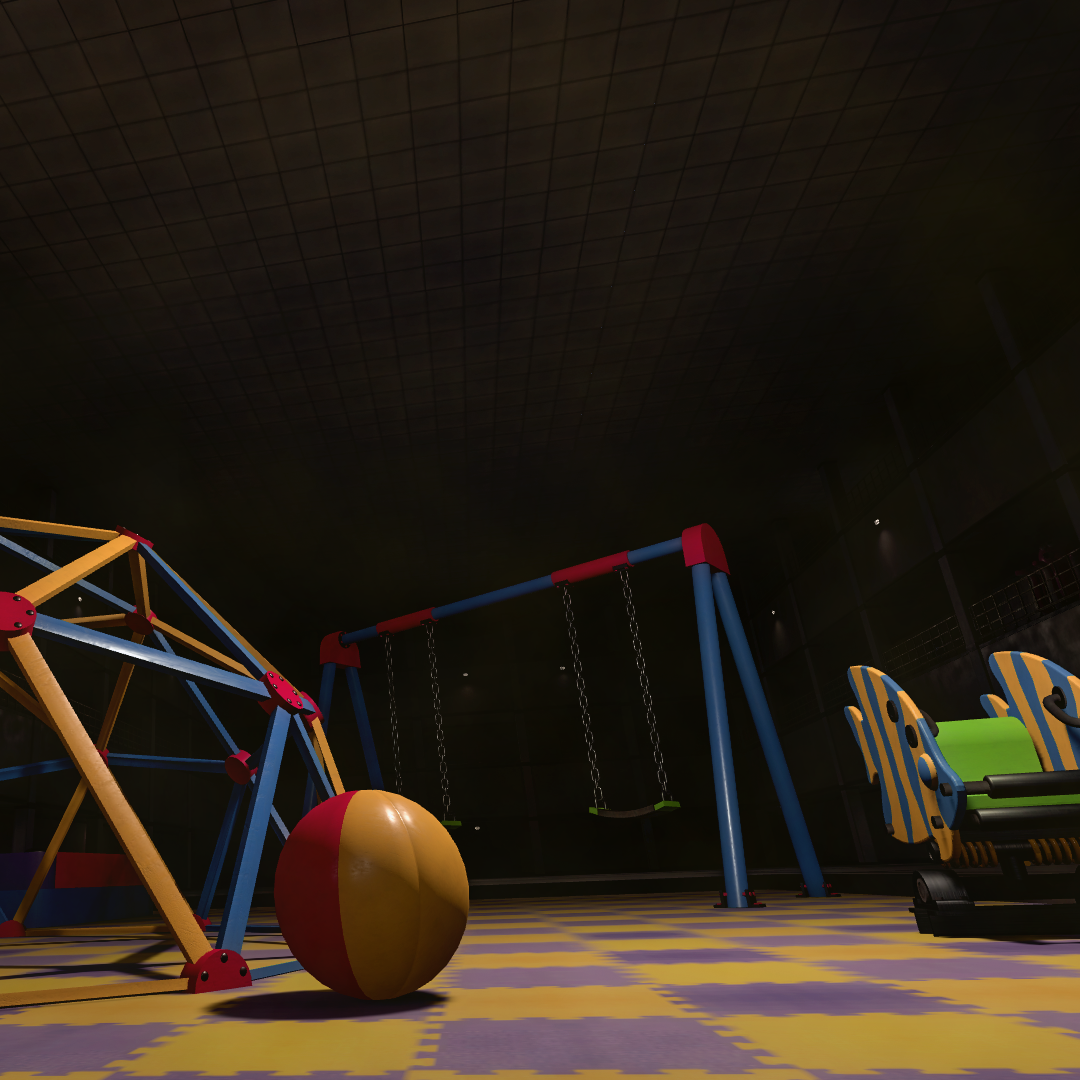
- Defined the modular level structure: a pool of 13 playable floors sequenced procedurally across 3 difficulty tiers (Easy / Medium / Nightmare) and 4 thematic domains (Office / Playground / Underground / School)
- Designed 7 levels end-to-end, from paper layout through staging, integration, polish and lighting
- Direct management and mentoring of 3 designers across game design and level design
- Cross-disciplinary coordination with engineering, art, audio (Blanktone Studios, Lyon) and voice (Jullian Champenois)
- Owned arcade format constraints: 30-minute session budget, variable group size from 1 to 4, hardware compatibility across HTC Vive, HTC Focus and other venue headsets
- Drove playtest iteration with arcade venue audiences throughout production
Level design
Darkensum's level architecture is modular and procedurally sequenced. A pool of 13 playable floors is drawn at random for each session, organized across a difficulty grid (Easy / Medium / Nightmare) and 4 thematic domains (Office / Playground / Underground / School). A typical session runs through 4 to 7 floors before reaching the final level.
This structure imposes a strict constraint on every level: each floor must function as a standalone unit. A player who joins mid-session needs to read the objective in under 10 seconds. The resolution loop is canonical across all levels: find the badge, bring it to the exit elevator scanner, move on. That shared grammar holds the experience together across radical changes in theme and difficulty tier.
Linear narrative build-up is not an available tool. Every floor delivers its own self-contained arc of tension within a fixed time budget. Dread has to emerge from sightlines, lighting, audio, and encounter geometry: not from scripted progression across floors. Each layout was reworked multiple times to land the right moment of doubt at corners and doorways, and to control exactly what the player could and couldn't see from any given position.
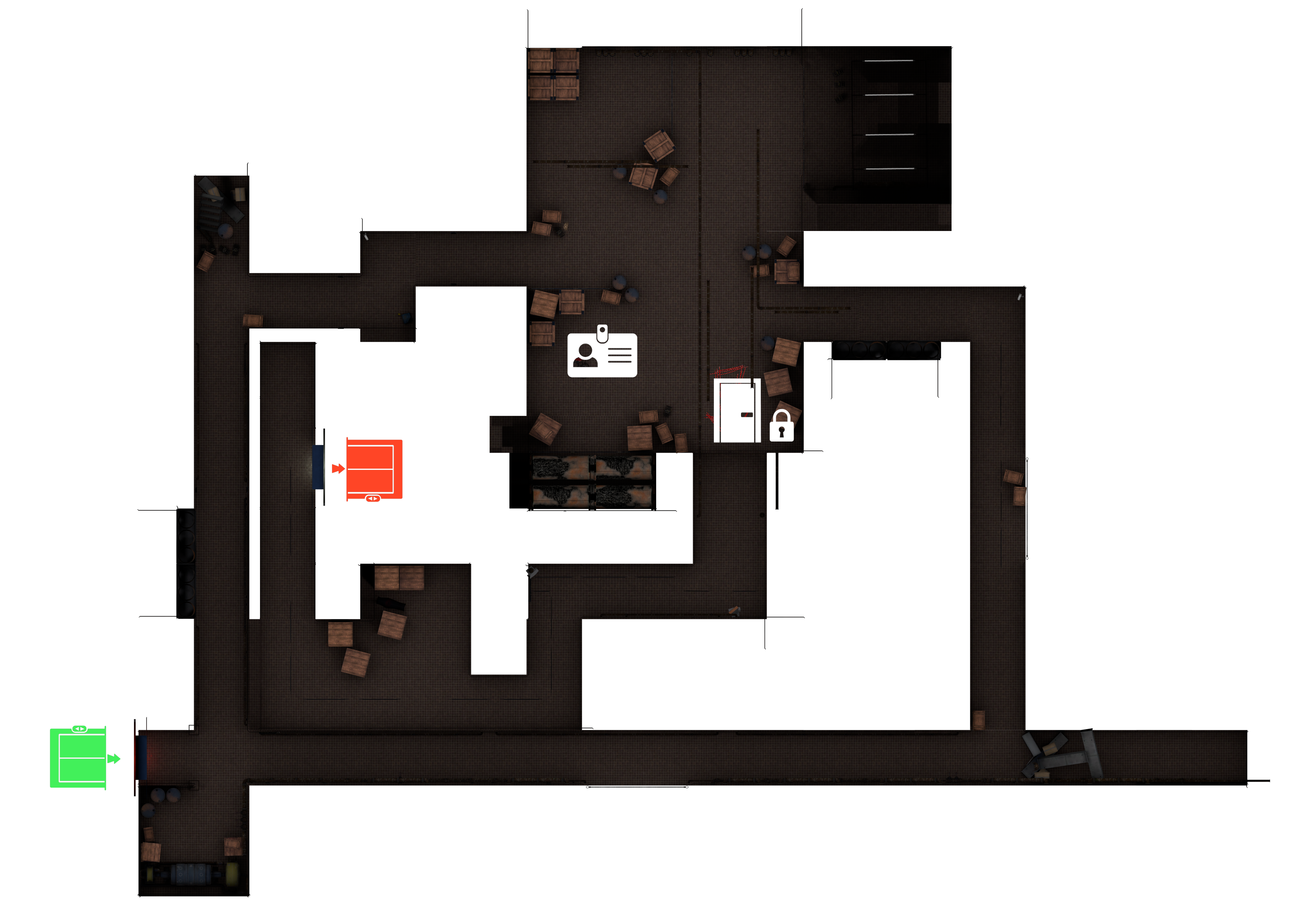
A shared visual code runs across every floor, giving the player consistent spatial landmarks regardless of thematic domain:
- Green elevator : arrival point and player spawn for the floor
- Red elevator : exit objective, requires a valid badge to unlock
- Badge (ID card) : the key item, always the primary objective
- Padlocked door : locked passage, requires the corresponding badge
This grammar stays constant across Office, Playground, Underground, and School themes, allowing players to reorient immediately even when the visual language of the environment changes entirely between floors.
Designing for 1 to 4 players adds a second constraint on top of the modular structure: the same level has to land for a solo player and for a full group, two fundamentally different emotional contexts. Solo play relies on environmental tension; group play needs moments that pull individuals away from the safety of the pack. Every floor was designed to work across this range without branching.
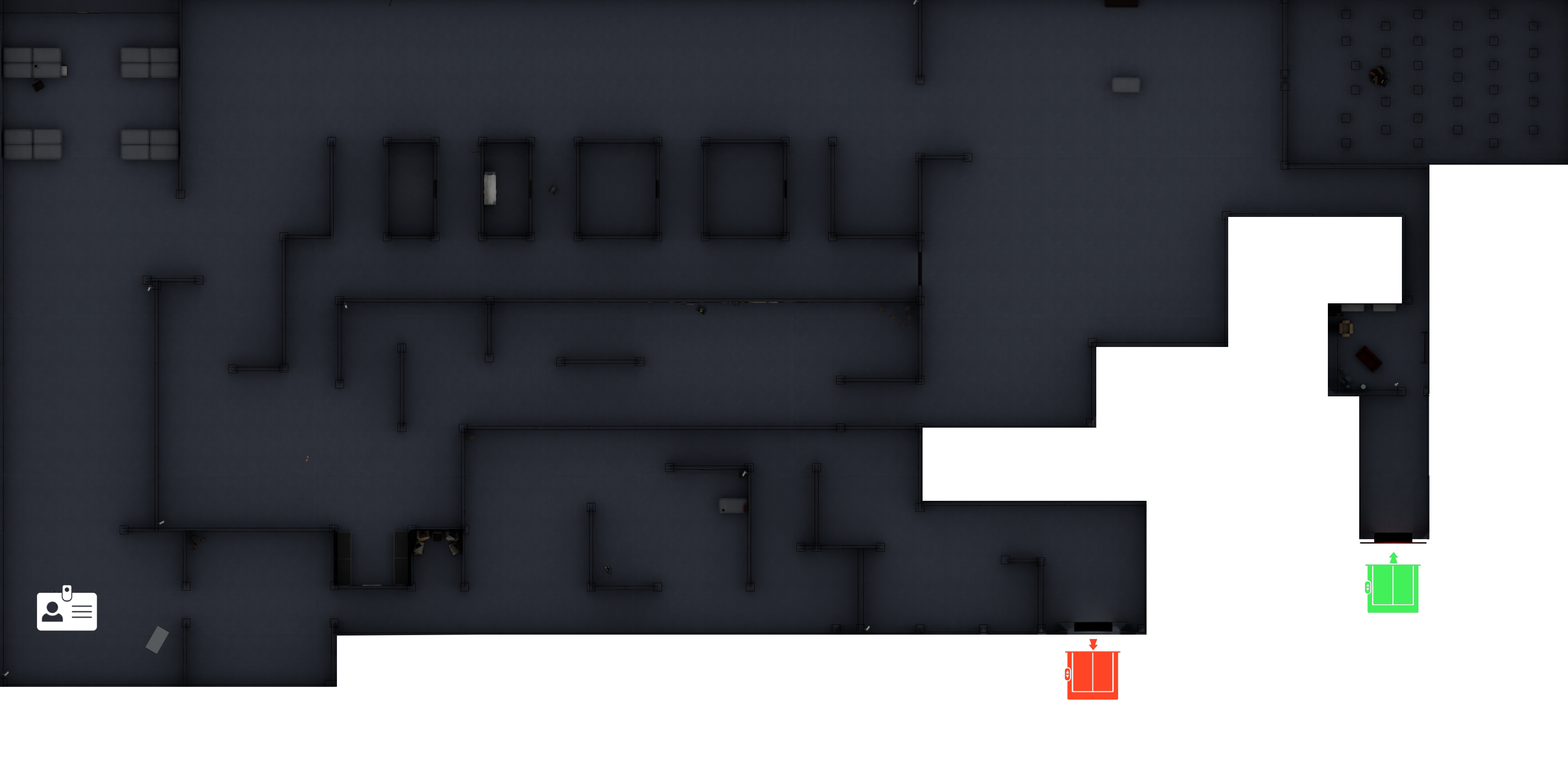
The largest and most complex floor in the game, built on Backrooms aesthetics and Liminal Space visual culture. The layout is deliberately vast and quiet: players are forced to spread out to find the exit badge, which creates natural isolation without any scripted trigger. The floor runs slower than any other in the pool, building a sustained, low-frequency dread.
The design pivots sharply once the badge is collected. TV Head immediately enters chase mode, and the only escape route runs through a narrow, near-dark corridor. The contrast between the slow exploratory phase and the sudden forced sprint is the core fear mechanism of this floor. The post-badge sequence is the hardest moment in the entire game, with staged creature interceptions timed around the corridor geometry.
A near-axial layout where the solution is immediately legible: the exit elevator is visible almost from the spawn point, but the direct route is blocked. Players must find an alternative path, which splits naturally into two routes of unequal risk. The floor teaches the split-group strategy without any instruction: geometry does the work.
This level also establishes a key rule that the game maintains throughout: if even one player reaches the exit, the whole group progresses. Groups internalize this through play, and it changes how they approach risk-taking in every subsequent floor.
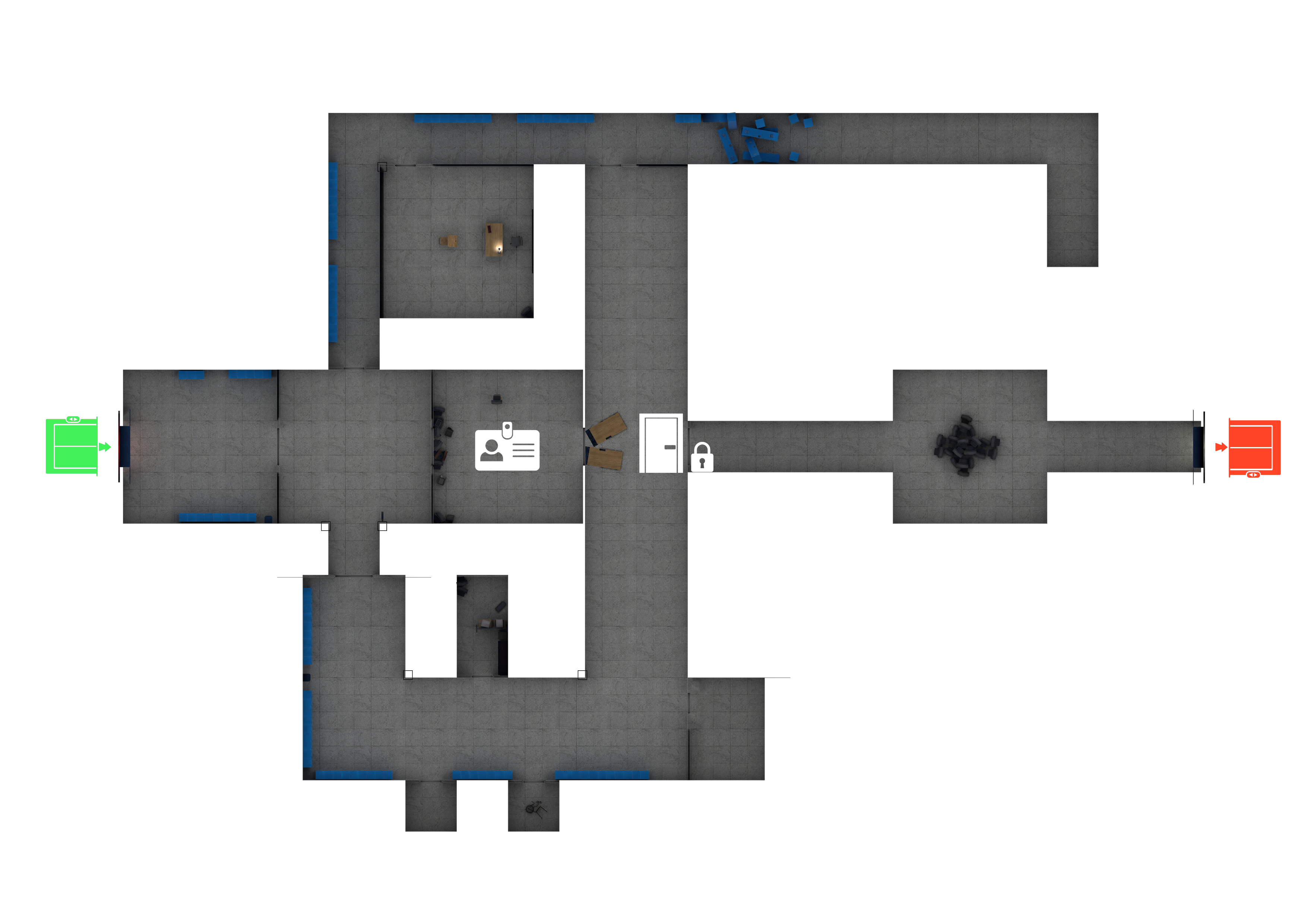
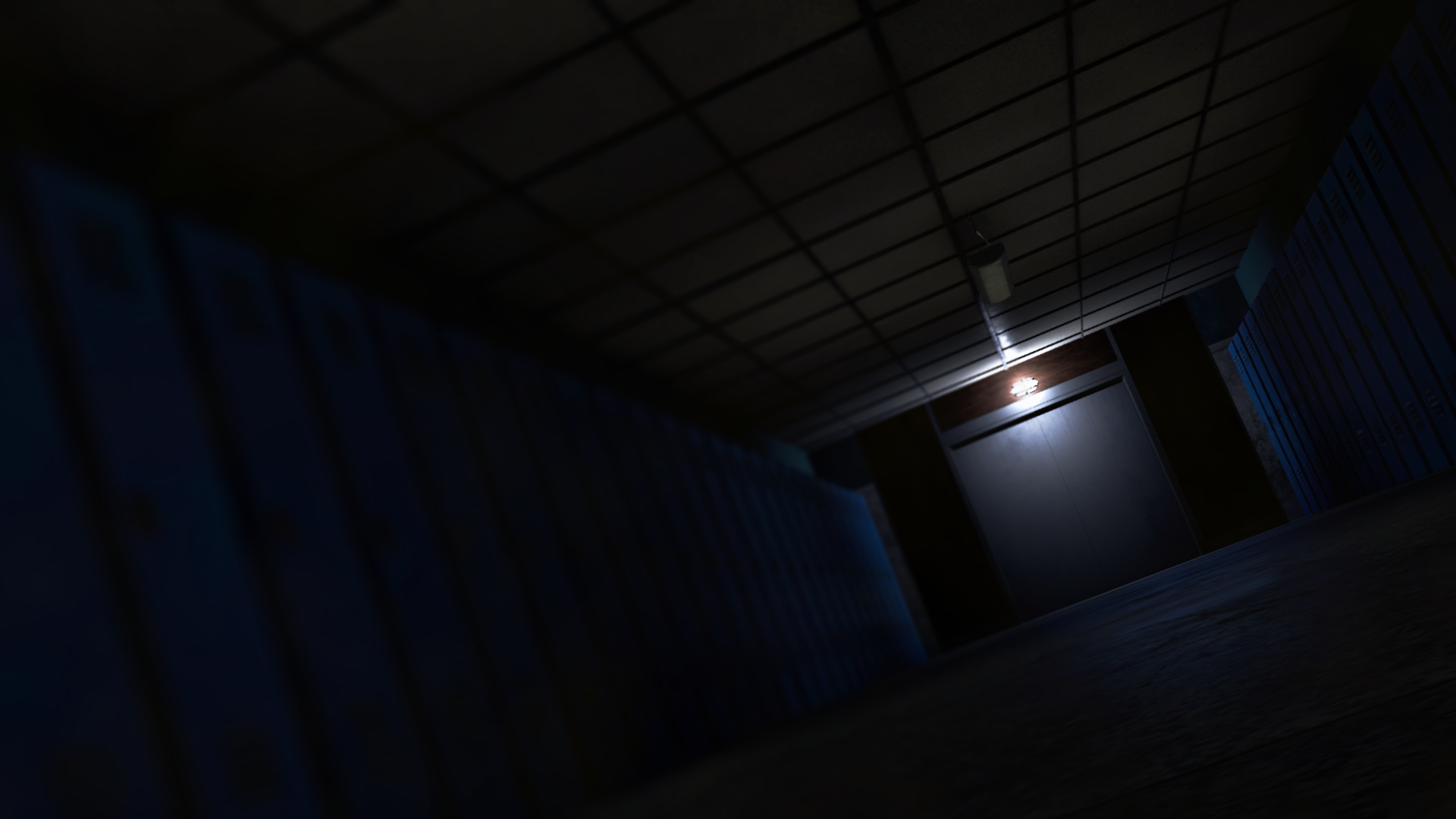
Built around isolation and claustrophobia. The layout channels players through narrow corridors where TV Head, if it appears, is nearly impossible to avoid. The tension mechanism is anticipatory: the fear of the corridor is more effective than the encounter itself. The player who goes alone to retrieve the badge is structurally the most exposed position in any session: this floor produces that split at an architectural level.
The badge is located in a dark room at the end of the main passage, requiring flashlights to navigate. Once collected, a red light trail appears as the only escape guide, adding urgency without any HUD element. The player who goes alone to retrieve the badge is structurally the most exposed in the session.