GANG OF DUMMIZZ
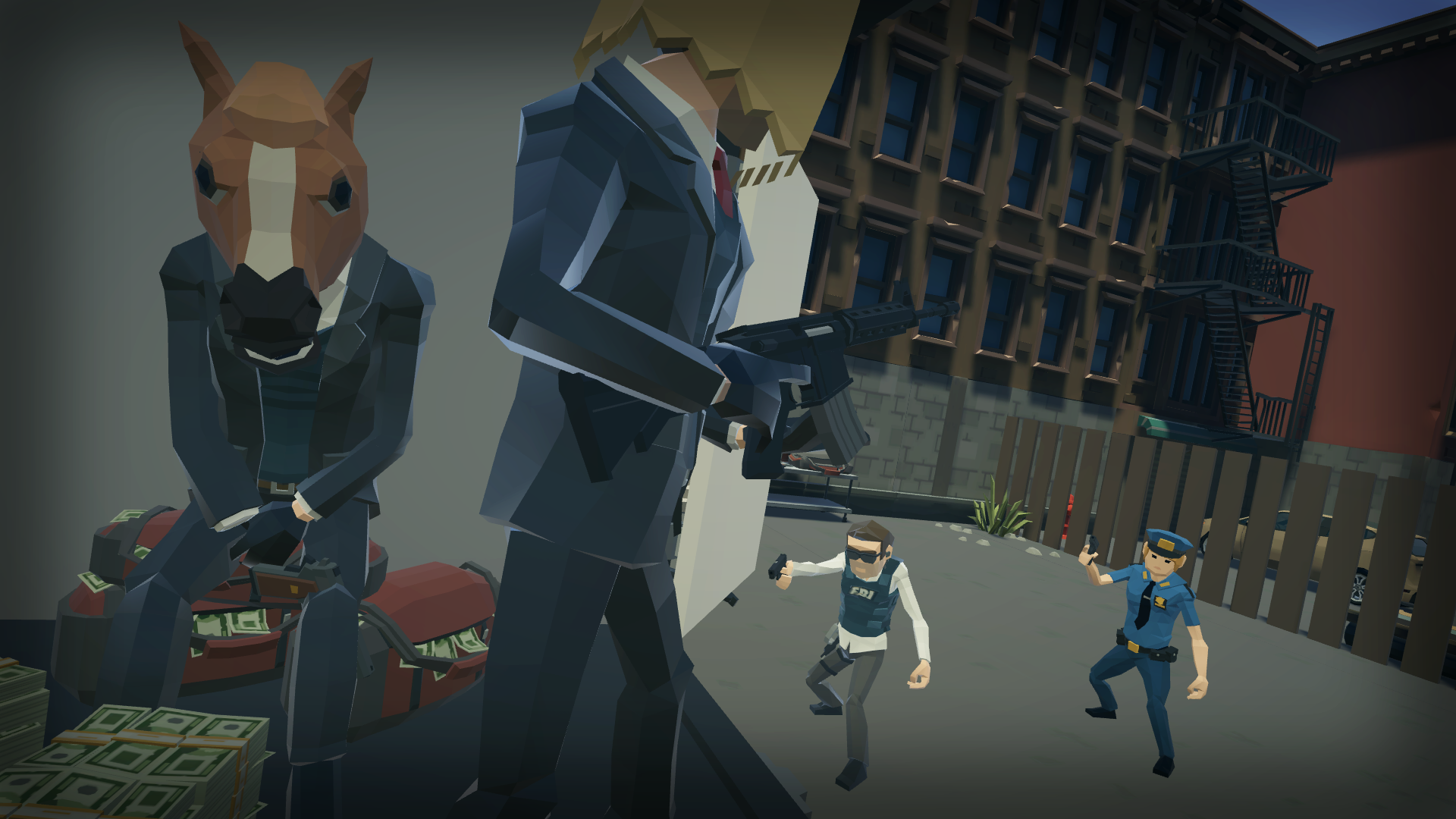
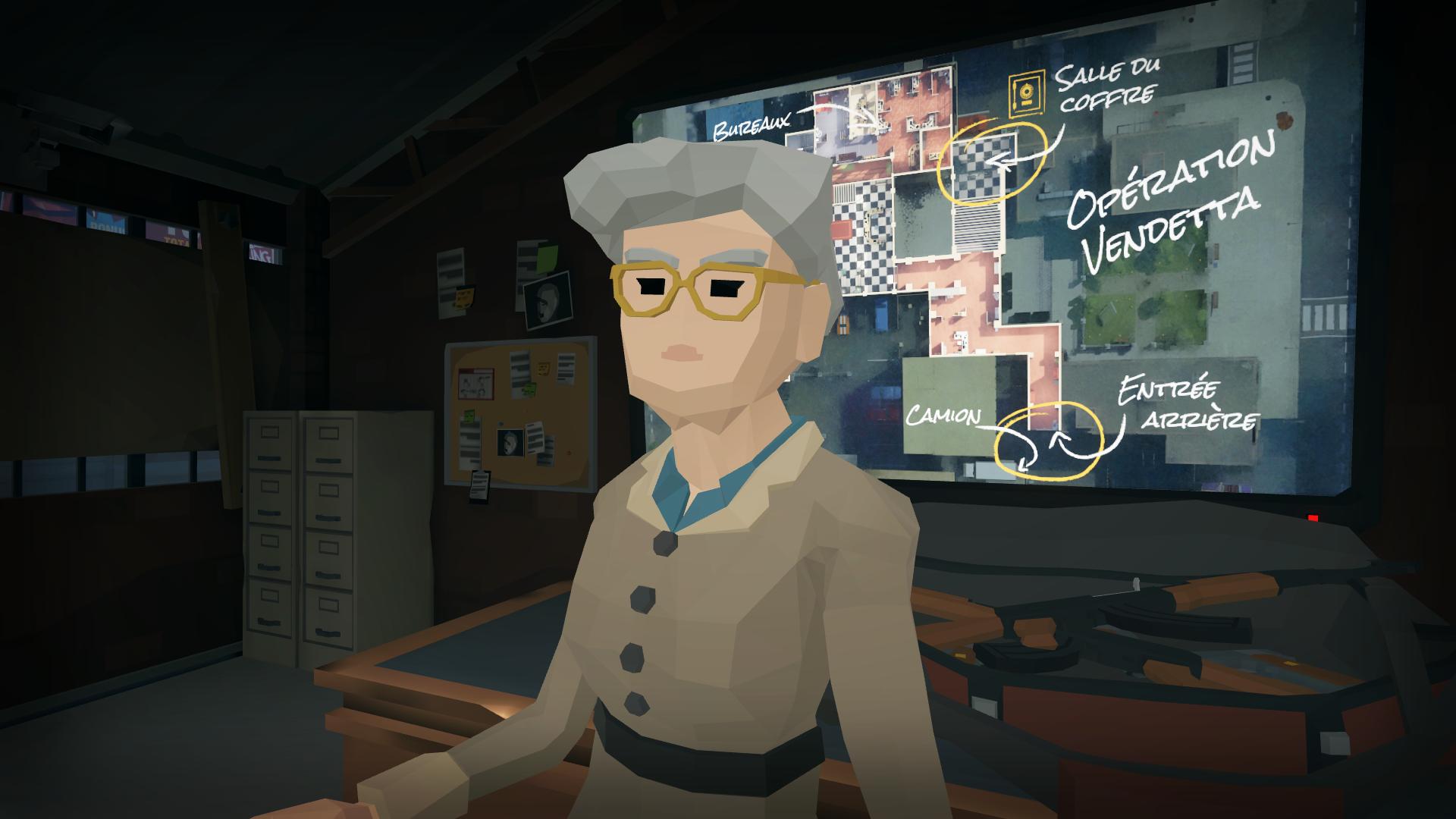
Synthesis VR page ↗Gang of Dummizz is the studio's flagship title. A cooperative VR heist game for 2 to 6 players. Former bank employees, wrongly accused, decide to take revenge the obvious way: rob the VSC Bank. Players plan the heist, loot everything they can get their hands on, crack the safes, dodge the police, and escape with the biggest haul possible. Physics-based interactions and a fun, offbeat universe in an arcade session of 15 to 30 minutes. The per-minute billing model shaped every design decision: the game had to stay fast and readable for walk-in audiences, while the loot-driven loop kept groups coming back.
Lead Game Designer
I owned the full design vision and drove the team across iterations and live updates. The core challenge was designing for unpredictable player mixes: different group sizes, skill levels, and session lengths, all billed by the minute, with no way to know the group composition before the session starts. Every system had to be legible and functional from the first second, at any scale.
- Owned the product vision for the studio's flagship arcade title, balancing arcade economics (per-minute billing) with player retention and return visits
- Defined the core gameplay loop: cooperative looting, shooting, safe-cracking, and escape pacing
- Direction and mentoring of 2 designers across game design and level design
- Cross-disciplinary coordination with engineering, art, audio, and the arcade operations team
- Drove playtest iteration with real arcade audiences across 154 venues
- Oversaw post-launch balance patches and content updates
Design challenges
The same level has to work for a 2-player session and a 6-player group, billed by the minute, with no way to know the composition before it starts. Constraint-driven design: every mechanic and spatial decision was evaluated against the worst-case player split, never optimized for a single scenario.
VR arcade context forbids HUD-heavy designs. Players need to read the bank layout, threat position, and loot priority through the environment alone. Sightline control and spatial grammar do the work that a minimap would do elsewhere, with zero tutorial time available.
Sessions had to be short enough to keep per-minute billing comfortable for venues, and deep enough to drive return visits. The design budget was time, not features: arcade pacing as a hard constraint on every system, from loot density to police escalation speed.
6 players looting a bank simultaneously is by nature chaotic. Zone structure and sightline design had to channel that chaos into readable decisions: where to go, what to grab, when to run. Spatial anchors and clear zone identities gave players orientation without pause menus or coordination instructions.
Level Designer
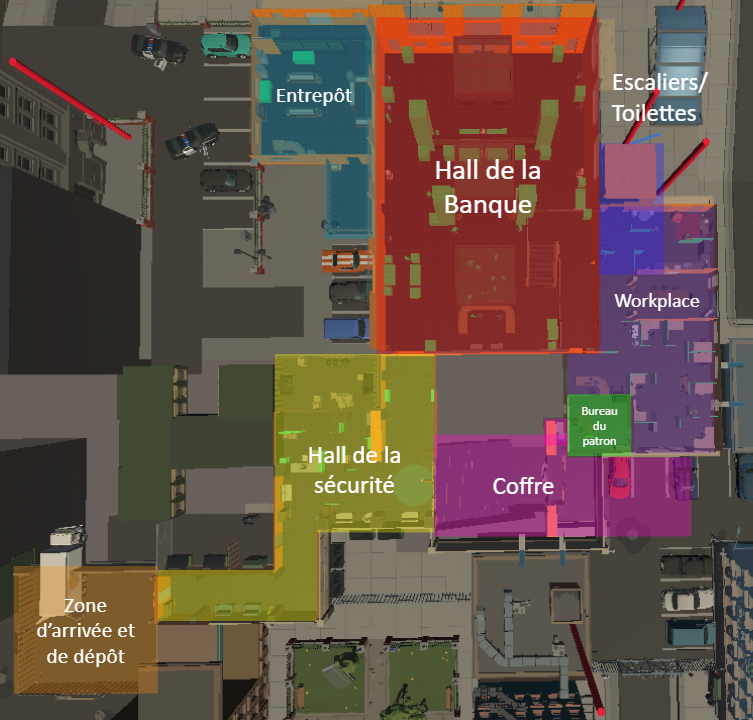
Gang of Dummizz takes place in a single level: the VSC Bank, structured across 6 main zones, each with its own spatial role, risk level, and loot profile. There is no level sequence: players drop into the bank and immediately have to read the space, split up, and make decisions. The level is the game, from the first second to the last.
Every zone had to respect a shared design grammar: controlled sightlines for shooting mechanics, clear loot visibility, police entry points readable at a glance, and a session-length budget per area. Within that grammar, each zone needed a distinct spatial identity so that players could navigate by feel, without a minimap. The loot-driven structure is also a risk calibration tool: high-value zones are high-exposure zones. Players who read the sightlines and police patterns can stay profitable; those who don't get caught and learn from it.
The level was designed to support 2 to 6 players simultaneously with no branching: groups naturally fan out across zones, with the density of players per zone adjusting organically to group size. That distribution had to feel intentional at 2 players and still feel alive at 6.
Designed as the entry zone: the space where players learn the core rules of engagement. The layout is built around two learning objectives: understanding effective shooting range on enemies, and learning not to hit hostages in the line of fire. Large glass walls create sightlines through adjacent zones, letting players anticipate police arrivals before they reach the hall rather than reacting at point-blank range. The zone teaches predictive positioning before any other part of the level demands it.
The area closest to the enemy entrance is the most exposed position in the hall and is deliberately designed as a risk and reward space: it holds the highest concentration of valuable objects. Players who understand the sightlines and engagement distances can hold it safely; those who don't get punished and learn from it. The tension between threat and reward in that zone produces the most decisive choices in the session.
Reception
Gang of Dummizz became and remained the studio's most played title, accounting for 70% of total studio playtime across 154 arcade venues worldwide.