JOLLY ISLAND
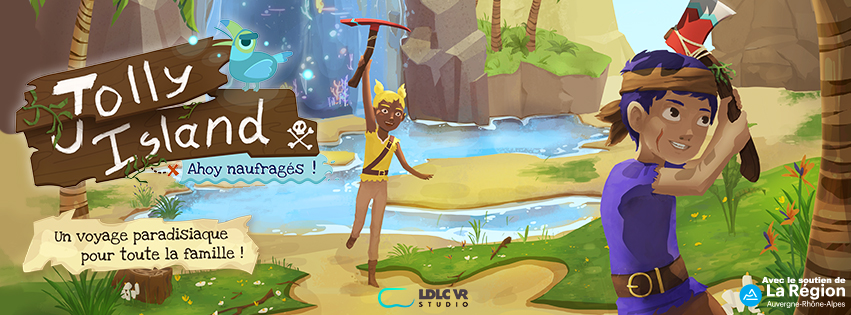
Synthesis VR page ↗A cooperative VR game built for arcade venues, targeting families and first-time VR players. Players wash up on a mysterious pirate island and must gather wood and iron to rebuild their ship before the volcanoes erupt. The design prioritized immediate accessibility and cooperative discovery over mechanical depth. On this project I acted as both Lead Game Designer and interim Game Director.
Design approach
Designing for families and first-time VR players means zero onboarding tolerance: the game has to be understood within the first seconds of play. Mechanics are gesture-based and instinctive : chopping wood with a hatchet, mining iron with a pickaxe, with no text tutorials, no UI overlays.
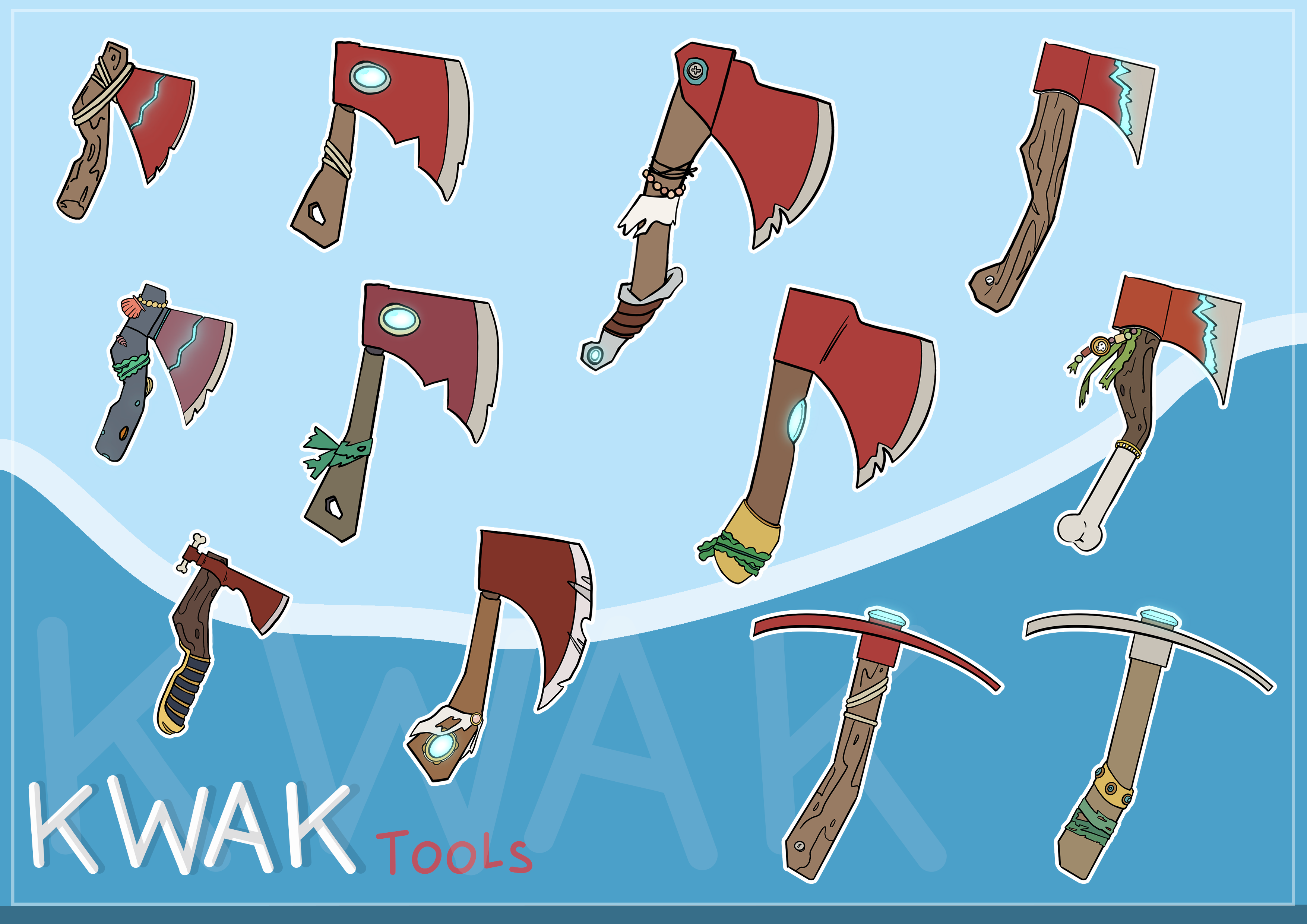
- Tool design communicating use through shape and color codes : the hatchet's silhouette reads "wood / chopping", the pickaxe reads "rock / mining", and their color palette visually links each tool to its target material and area at a glance
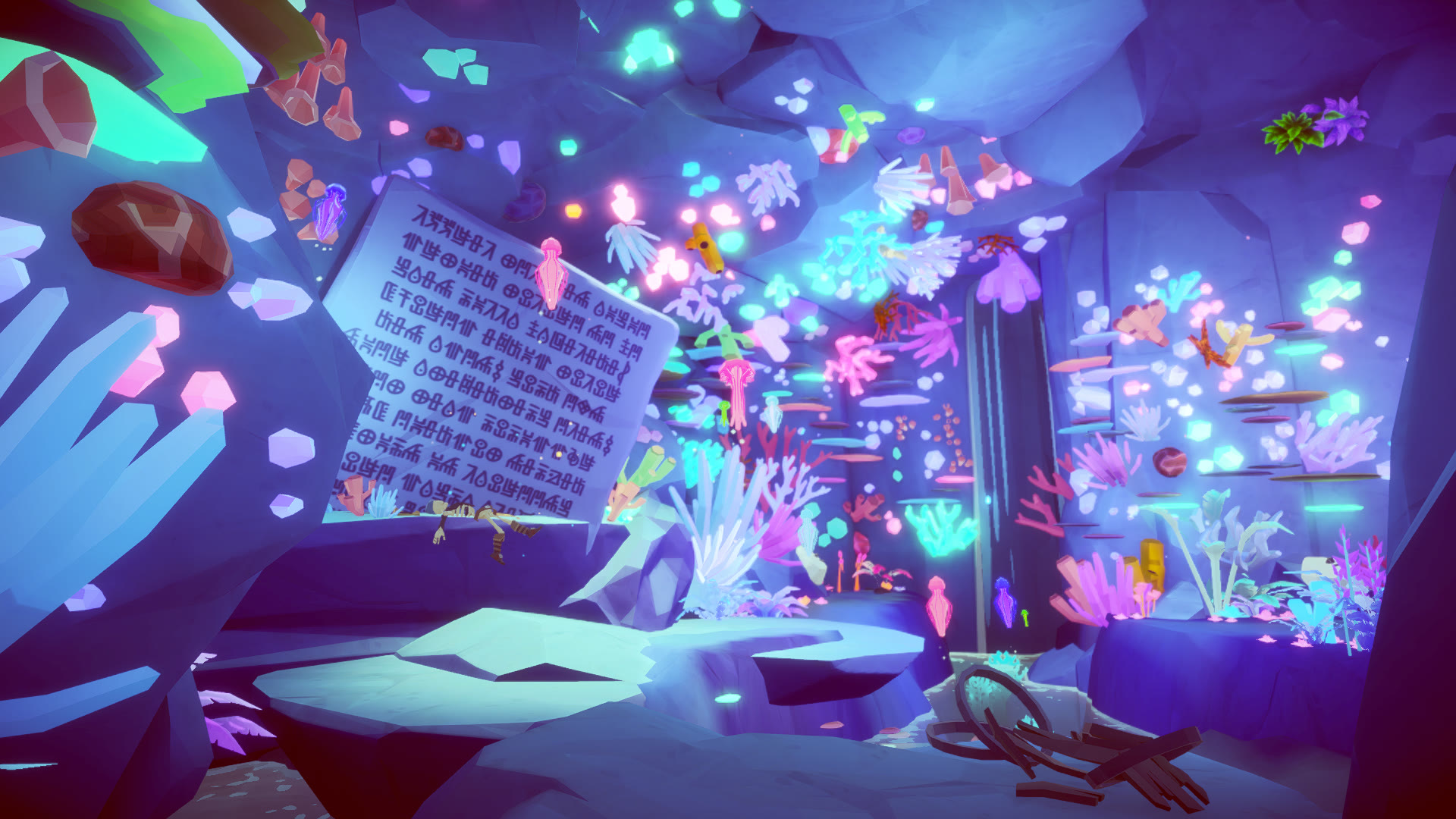
- No death, no failure · players explore at their own pace across 4 distinct areas (beach, jungle, cenote, ship), each with its own resource or discovery
- Cooperative pressure plates on treasure chests: opening one requires a precise number of players simultaneously · no prompt, pure spatial affordance
- Wrist-mounted watch as the only HUD: resources collected, time remaining, and medal targets (bronze / silver / gold)
- Session length configurable by venue operators, from 15 to 40 minutes
Acting Game Director
On this project I stepped into the Game Director role while also leading game design, an unusual dual position that shaped how the whole project was framed from the start.
The core directorial decision was one of audience clarity. In the B2B VR market, a recurring issue across the studio's productions was gradually drifting away from the original target audience: venue game masters would push for games to serve different groups, and projects would lose their focus.
The brief I set was clear: a family-friendly game for VR beginners. A VR arcade session typically runs around 20 minutes, so efficiency is key: mechanics had to be easy to execute and quick to understand. At the same time, I wanted the game to offer meaningful interactions and a gamefeel genuinely suited to VR, not just functional, but satisfying to play.
The pirate setting came naturally: part of the team were fans of One Piece, others had spent a lot of time in Sea of Thieves. Beyond personal taste, it was the right call for the audience: a theme that reads immediately for both children and their parents, the core demographic of VR arcade venues.
On the team side, I led the design team throughout production: guiding designers, running daily build tests, and coordinating closely with art, engineering, and marketing to keep the creative direction coherent from concept to delivery.
- Creative vision of the arcade game and product positioning for a family-first VR audience
- Scope trade-offs and arbitration with studio leadership within budget and timeline constraints
- Partner relationship with Blanktone Studio for sound design and music
- Product vision for the VR arcade market: session format, venue operator constraints, B2B distribution via Synthesis VR
Lead Game Designer
- Direction and mentoring of 3 designers across game design and level design
- Cross-disciplinary coordination with engineering, art, and production to maintain design intent across all game systems
- Hands-on contribution on UX, tool design, game feel and in-game dialogue
- Design consistency across all 4 game areas and core gameplay loops
Directorial challenges
Designing for players aged 7 to 77, most of them first-time VR users, meant every mechanic had to be self-explanatory from the first second. No tutorials, no UI text: affordance through gesture, shape and color only.
In a shared physical space, each player needs to feel involved at all times. The open-world structure and cooperative treasure mechanics were designed to distribute agency without requiring coordination instructions.
Arcade sessions range from 15 to 40 minutes depending on the venue. The game had to feel complete at any duration, with configurable length and medal tiers that scale the objective without altering the experience.