MISSION NAR-6
A single-player VR puzzle game set aboard a drifting spacecraft. The ship's onboard AI, weary and past caring, asks the player to help restart the vessel's systems before it gets pulled into the star Alpha Pavonis. Each solved puzzle generates an energy sphere that progressively powers the ship back up. Built for the VR Pod format, the design had to deliver a complete arc in under 10 minutes: short-form VR design is its own discipline, every second of friction matters when the customer is paying by the minute. Over one year of production in a 10-person team, I designed, integrated, and implemented 90+ unique puzzles built on 8 distinct mechanics, applying a consistent puzzle design framework to every one, in close collaboration with the Game Director and one Level Artist on the visual integration of each puzzle environment.
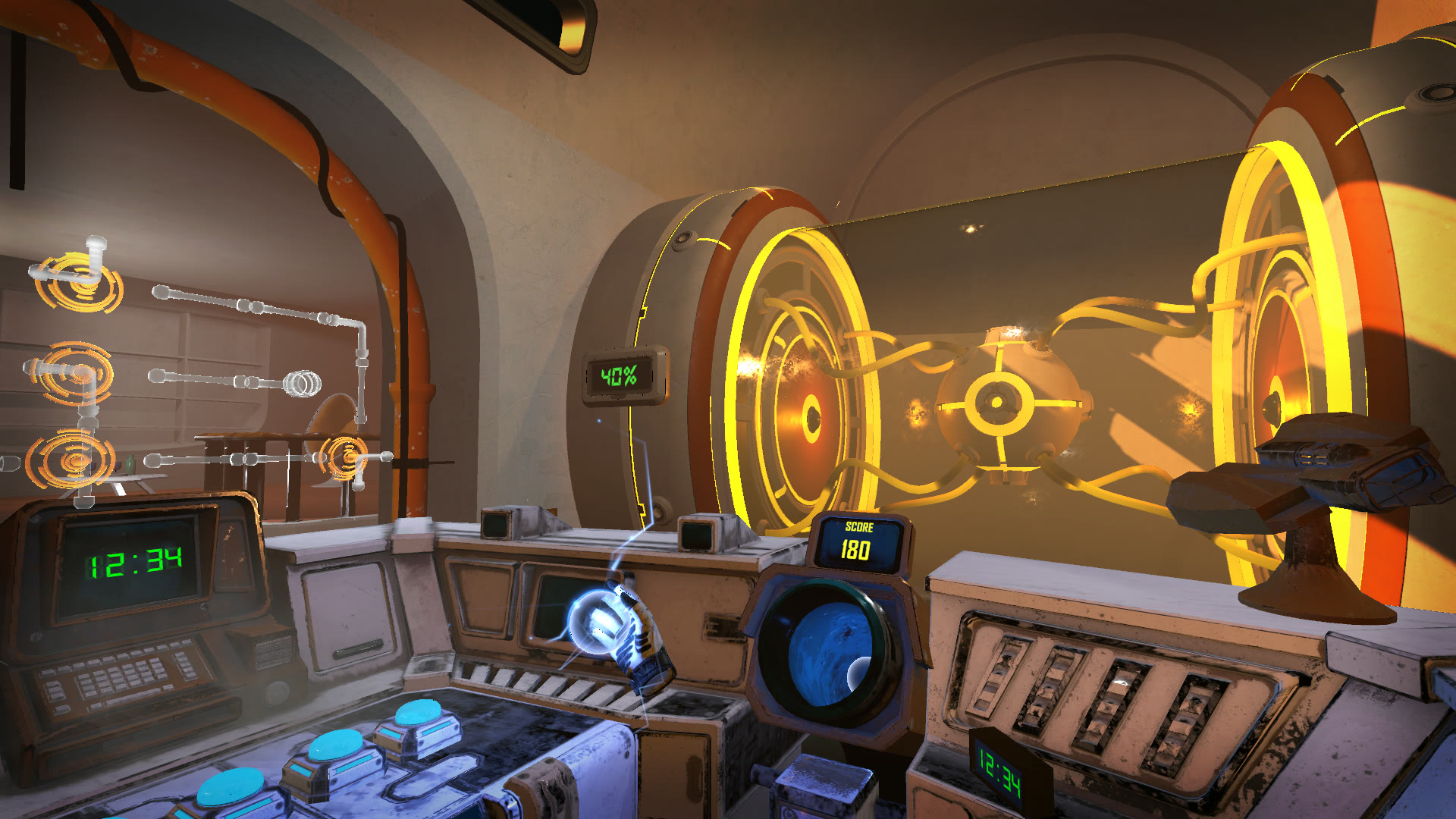
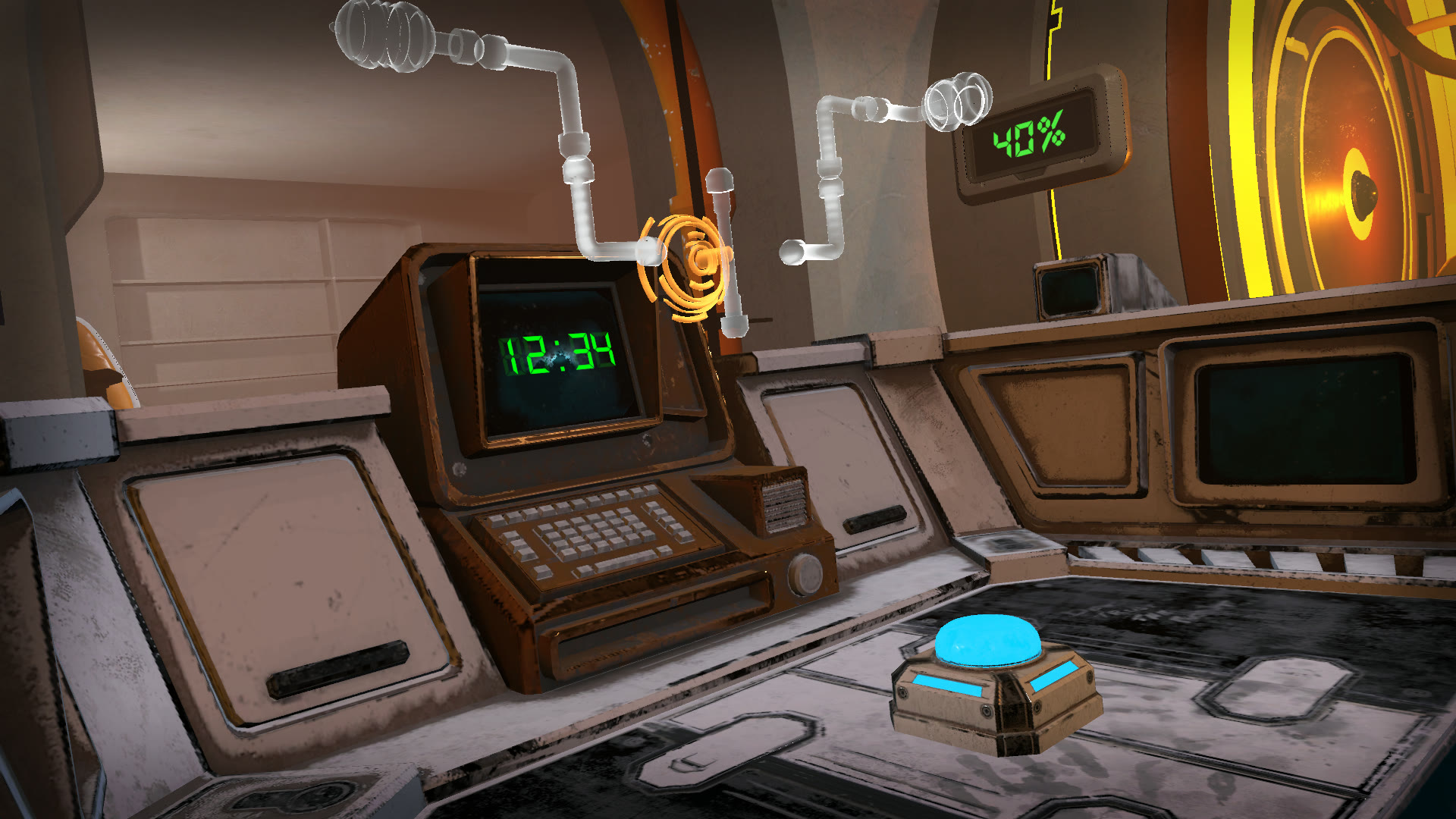
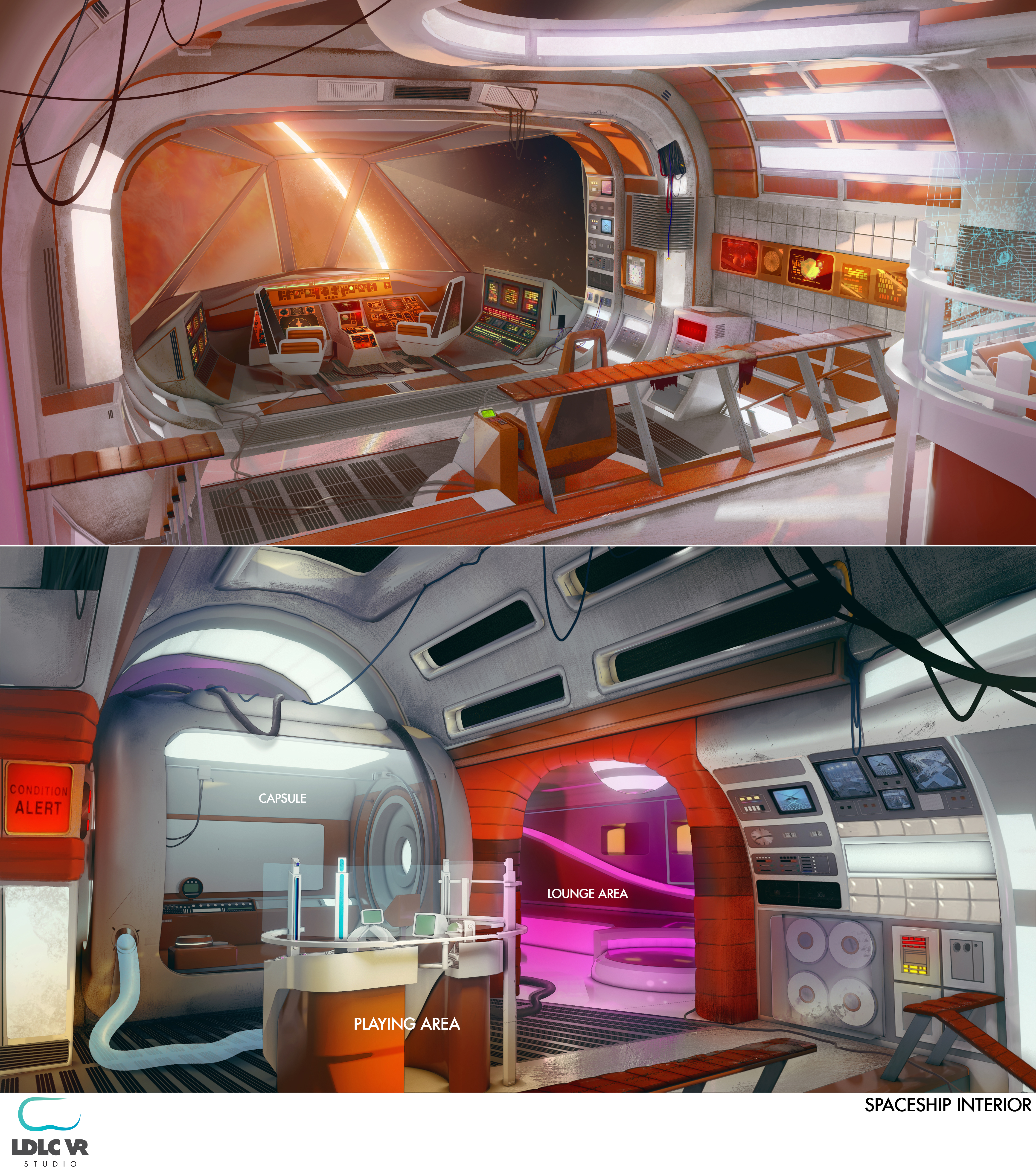
Level & Puzzle design
Mission NAR-6 posed a puzzle design challenge rare in studio arcade production: delivering a high volume of varied puzzles over one year, with consistent quality across every one of them. The result is 90+ unique puzzles, built on 8 core mechanics, each designed, integrated, and implemented against the same legibility standard and tested for readability in a solo VR arcade context with no coaching available.
I applied a consistent puzzle design framework to every puzzle authored on the project. Each of the 90+ puzzles was designed to move the player through four distinct mental states in sequence:
- Goal clarity: the player understands what they are solving for in seconds, without dialogue. The recurring energy sphere anchors every new situation and signals the objective without any text
- Element discovery: the player can freely manipulate every puzzle piece to learn its function, with no failure state during exploration
- Solution construction: the player mentally builds a solution before executing, with no penalty for experimentation or partial attempts
- Solution execution: the player commits to their solution and resolves the puzzle, confirmed by physical and audio feedback
This framework kept quality consistent at volume: every new puzzle was authored against the same legibility checklist before integration, which made systematic puzzle authoring possible at this scale.
The 90+ puzzles draw from 8 distinct mechanics, each with its own interaction grammar. Every mechanic ships in 4 difficulty tiers (Very Easy, Easy, Medium, Advanced), driven by the geometric complexity of the puzzle modules and the number of interactions required. The same mechanic can range from a 5-second confirmation to a 45-second head-scratcher just by tier-shifting its parameters.
- Switch connection: route an electrical circuit by toggling switches across a grid
- Pressure switch and cage: free the energy sphere by activating the right pressure mechanism
- Pipe assembly: collect pipe segments of multiple shapes and assemble them to route the flow from inlet to outlet
- Shape-color socket fitting: match each plug to the socket sharing both its shape and its color
- Object portal: pass objects through two linked portals to deliver them to the correct destination
- Target shooting: fire a VR weapon to destroy specific targets and unlock the energy sphere
- Pump lever: work a lever rapidly to sustain the electrical charge before it drops
- Claw machine: operate a giant grapple to manipulate large objects at a distance aboard the ship
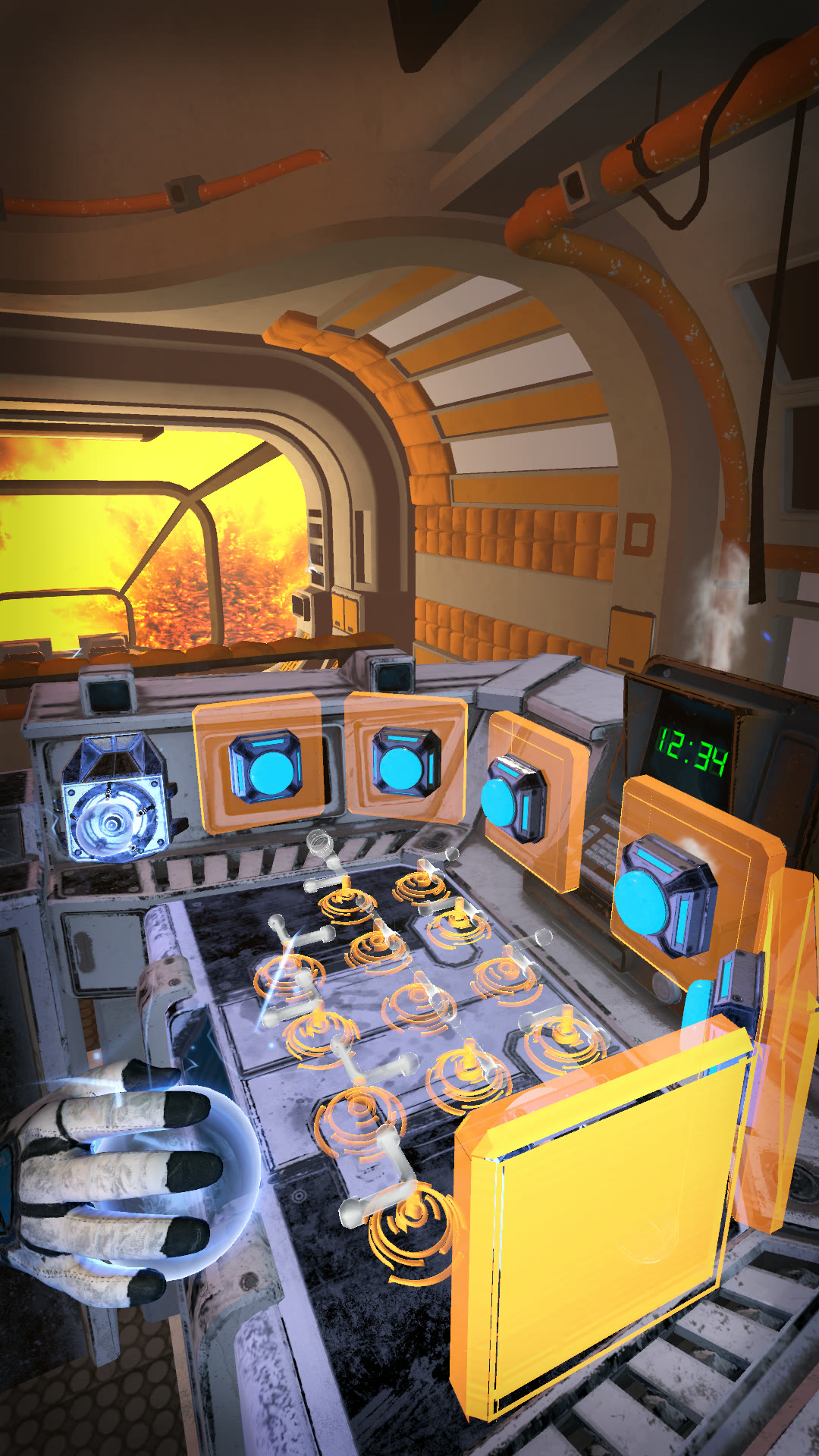
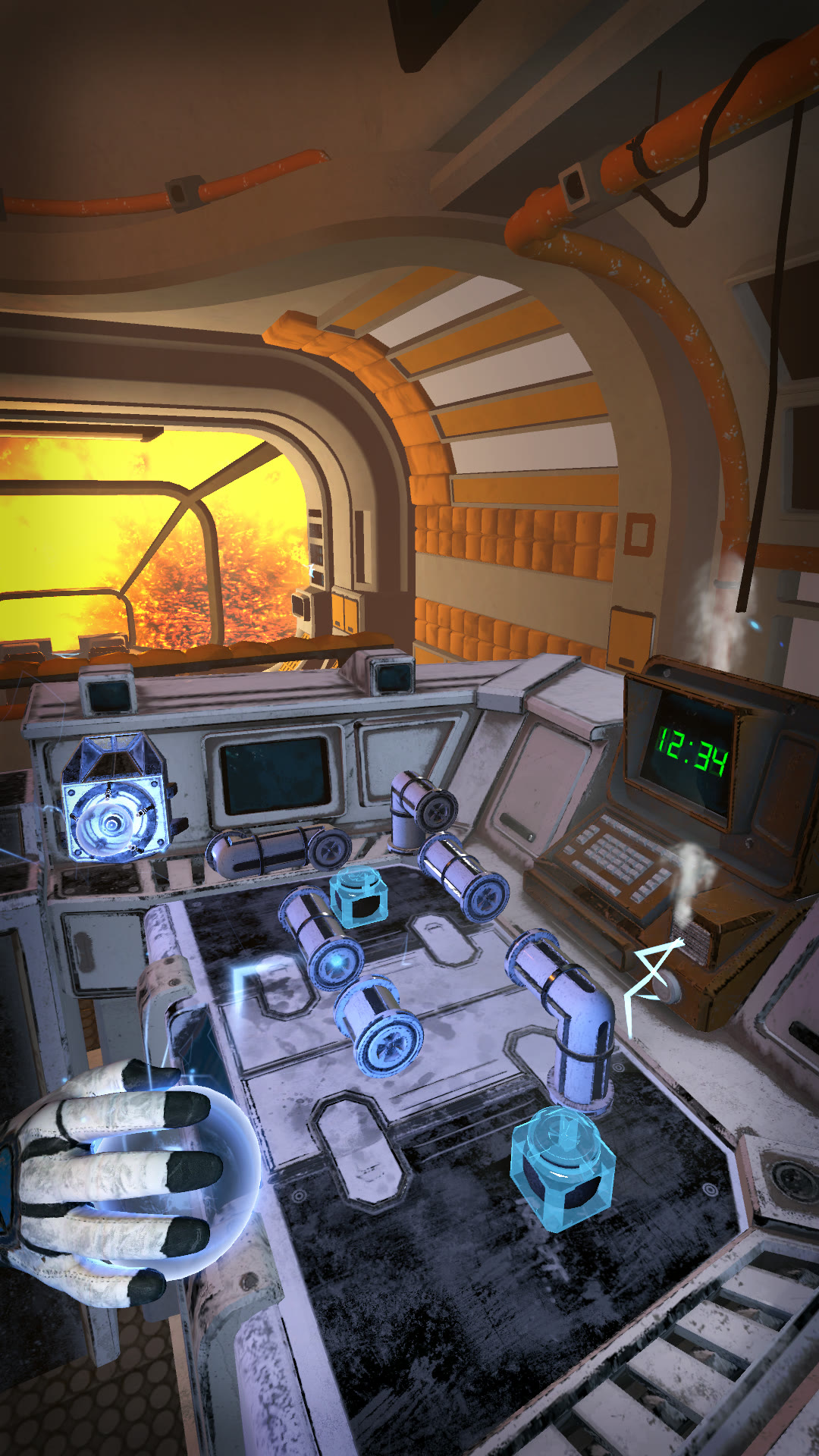
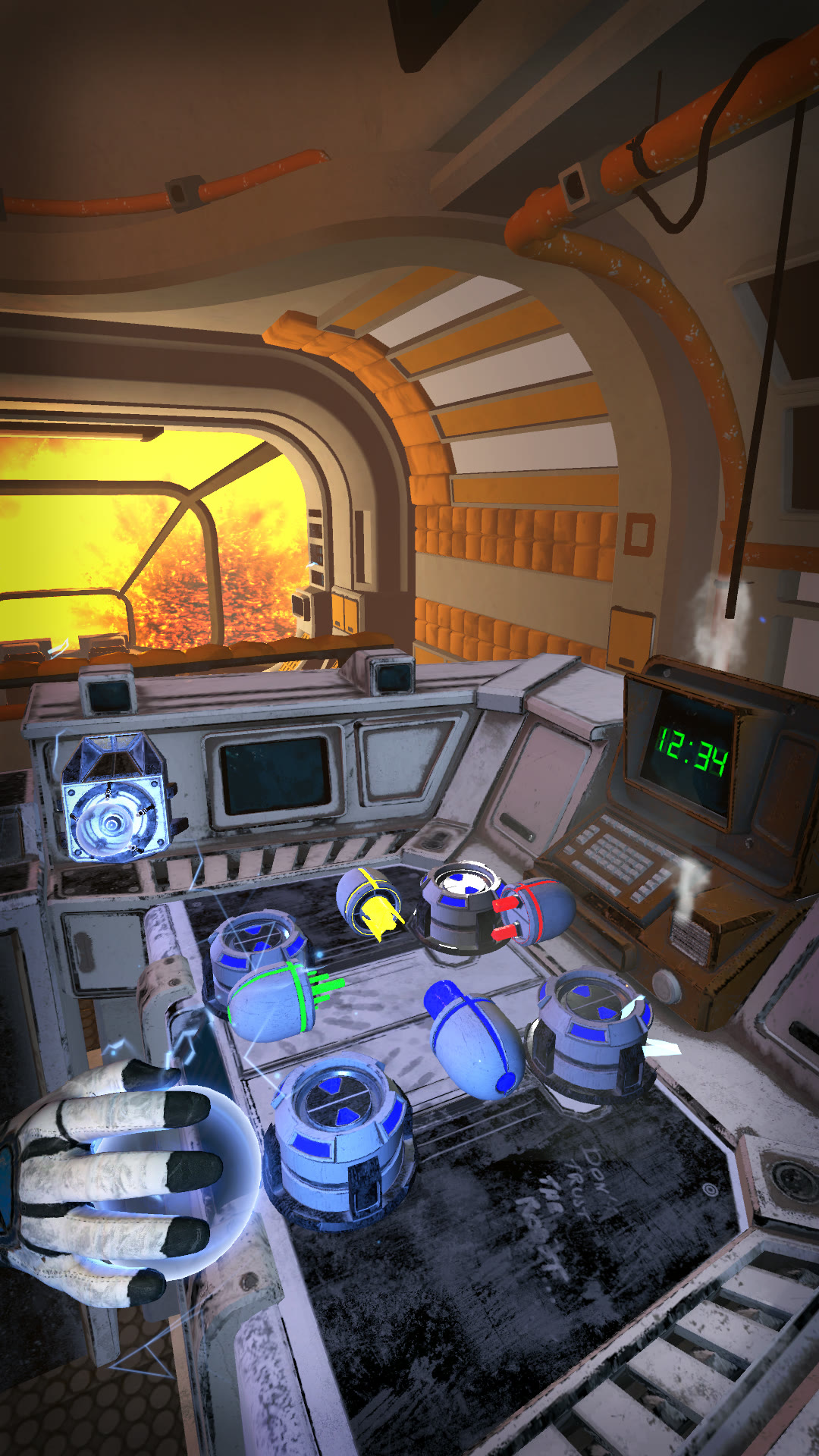
A 5-minute arcade session does not reward a linear difficulty ramp. Players need rest beats to stay engaged and spike moments to make the session memorable. I structured the session pacing around four cognitive intensity levels, calibrated against playtest data with arcade walk-in audiences:
- No Brain: a near-trivial puzzle placed deliberately after a hard one, a confidence rebound
- Easy Peasy: light cognitive load, building momentum before the next challenge
- Head Scratching: the real solve, demands deliberate reasoning
- What ??: not a difficulty peak but a surprise moment that breaks expectations and sticks in memory. A shape-color socket puzzle where dozens of objects suddenly cascade onto the table at once, ball-pit style: bewildering before it is difficult, and the moment players are still talking about on the way out
The curve oscillates between these four levels across the session, with two peaks and two breathing moments, rather than a straight escalation that would burn players out before the end.
Without a teammate to check with, a solo VR player stalls fast if a puzzle ever feels unclear. Every legibility cue had to come from the environment itself, with no UI fallback:
- Diegetic hint systems embedded in the ship environment: no overlay, no text prompt, no floating arrow
- Spatial gaze paths designed so the player's natural eyeline leads to the next interactive element without redirection
- Visual and haptic confirmation on every successful interaction, redundant with audio to avoid overlap with the AI's dialogue
Game design contributions
While the primary craft on this project was level and puzzle design, I contributed to game design alongside the Game Director on three specific areas:
- Tone direction for the onboard AI: anchored on Marvin from The Hitchhiker's Guide to the Galaxy (depressed-genius archetype, sarcastic voice), with secondary references to EDI (Mass Effect), HAL (2001), GLaDOS (Portal), and MCP (Tron)
- Scene transition system: inspired by Star Trek's Holodeck and Oculus First Contact, enabling seamless swap from one puzzle situation to the next without breaking spatial immersion
- Difficulty curve calibration in collaboration with the Game Director, tuned against playtest sessions with arcade venue audiences