TAVRN'S TAKEDOWN: NAHEULBEUK

A VR beat'em up set in the Donjon de Naheulbeuk universe, 200 years before the events of the franchise. The player brawls through corrupted taverns in the city of Mliuej, investigating a mysterious threat. My first project as Game Director, with a 25-person team and 5 external partners, over 2.5 years of production.
Three experiential pillars: Believable presence · Immersive physical interaction · Quirky role-playing universe.
Game director
I worked in a tight duo with our producer: he owned the backlog and delivery; I owned the creative direction and player-facing intent. Most sprint scope and milestone decisions were made together.
Acting as product owner alongside the producer, I defined the product vision and platform positioning end-to-end: what the game needed to be for its audience, and how to hold that intent across every production, marketing, and release decision.
- Communicating the creative vision through living documentation to production, marketing and partner teams
- Direct management of 3 designers across game design and level design; cross-disciplinary coordination of 6 leads across engineering, art, production and marketing
- Co-defining delivery milestones and sprint scope with the producer; shared arbitration on project risks within budget and timeline constraints
- Daily build testing with detailed feedback to all teams
- Creative coordination with 5 external partners: license, art studio, sound studio, EN/FR voice directors, including supervising voice recording sessions
- Drafting and following up on public funding applications: CNC pre-prod, CNC prod, AURA Region
- Industry and VR trend watch throughout production
Genesis & Pitch
The project originated internally: a narrative designer had a personal connection with John Lang ("Pen of Chaos"), creator of the franchise. I was given the responsibility of turning that opportunity into a solid concept: designing the pitch, aligning internal teams, and presenting it to the licensor. Once greenlit, I led the CNC pre-production application and a regional Auvergne-Rhône-Alpes funding application.
For Meta, I owned the external pitch end to end: the graphic design of the deck itself, rebuilt from the official key art, content structured around the IP, the team's track record, and the commercial opportunity, then the presentation and the discussion around the project with the platform team.
For PlayStation, ahead of the PSVR2 release, I worked closely with our business developer and our producer to get what the deck needed, and adapted the pitch to the platform.
The platform relationships themselves were run by others. I was in those discussions on everything creative, and on how the project was presented to third parties.
NDA notice. Pages have been removed from this deck and parts of others redacted, per the agreements with the licensor and the platform. What remains is the structure of the pitch and its design work.
Pitch deck, redacted (PDF · 18 MB) ↗
Directorial challenges
Adapting a beloved French IP for a primarily international VR market, without betraying Naheulbeuk's identity.
Holding the creative thread across the license holder, Artefacts Studio (art & reused assets), Blanktone (sound), Minuit Douze (PR), and two dedicated voice directors.
Identical gameplay on Meta Quest standalone and PC/PSVR2, not just performance parity. No "lite" Quest version.
Reusing and adapting Artefacts Studio's Naheulbeuk visual identity rather than starting from a blank page.
Three decisions that shaped the project
Mid-production, the leads and I identified a budget and scope drift. Rather than absorbing it by reducing quality or stretching the timeline, we made a more radical call: refocus on the VR core, physical interaction and combat.
Cut: meta-progression layer, slot machine, reputation system, procedural NPC encounters in the hub. Kept: procedural enemy spawning and random tavern sequencing, but each level is now hand-crafted around a specific power the player carries.
Initial pillars (Combat, Humor, VR Interaction, Replayability) described what the game contained. As the project matured, I evolved them into pillars describing what the player should feel: Believable presence · Immersive physical interaction · Quirky role-playing universe.
On every debated feature, the question shifted from "do we have everything we promised?" to "does this strengthen presence, interaction, or the Naheulbeuk identity?" It works better in VR, where felt experience matters more than content count.
I pushed the team to invest specifically in the sense of presence, structured around four components:
Level design
As Game Director, I set the high-level intent for levels: which player power was worth spotlighting, what a given space needed to convey. The micro level design (pacing, layout, encounter structure) stayed firmly with each level designer, who owned their levels end-to-end. My role was to validate the different aspects as they took shape, through frequent build testing at every stage of creation. That boundary made ownership a constant balancing act, handled through open and continuous communication throughout production.
I also stayed hands-on as a level designer myself on several main and side levels, from paper concept through prototyping and finalization: my role on the levels I touched was always contributor, not decision-maker.
Level design is my first passion in game development, a craft I find my way back to on every project I work on, whenever there's room for it. The condition is always the same: it has to serve the project, never come at its expense.
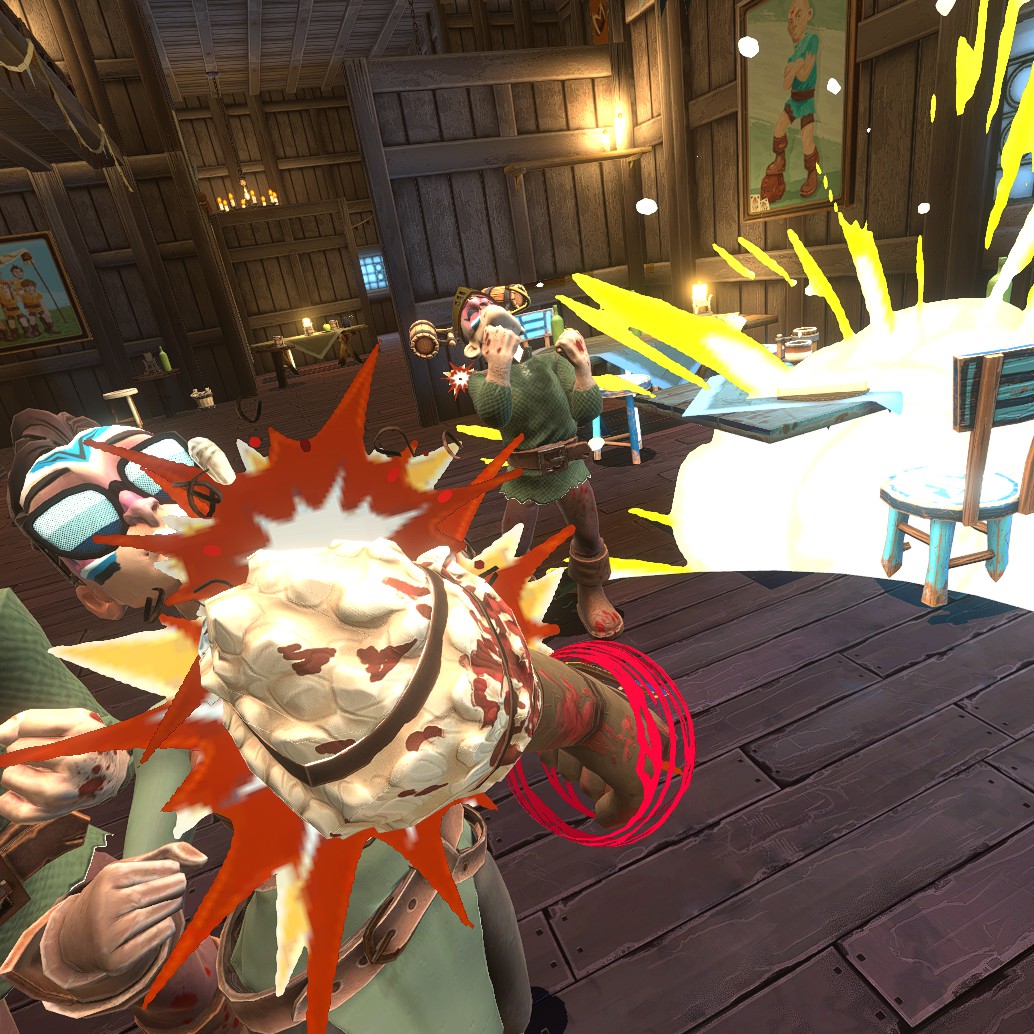
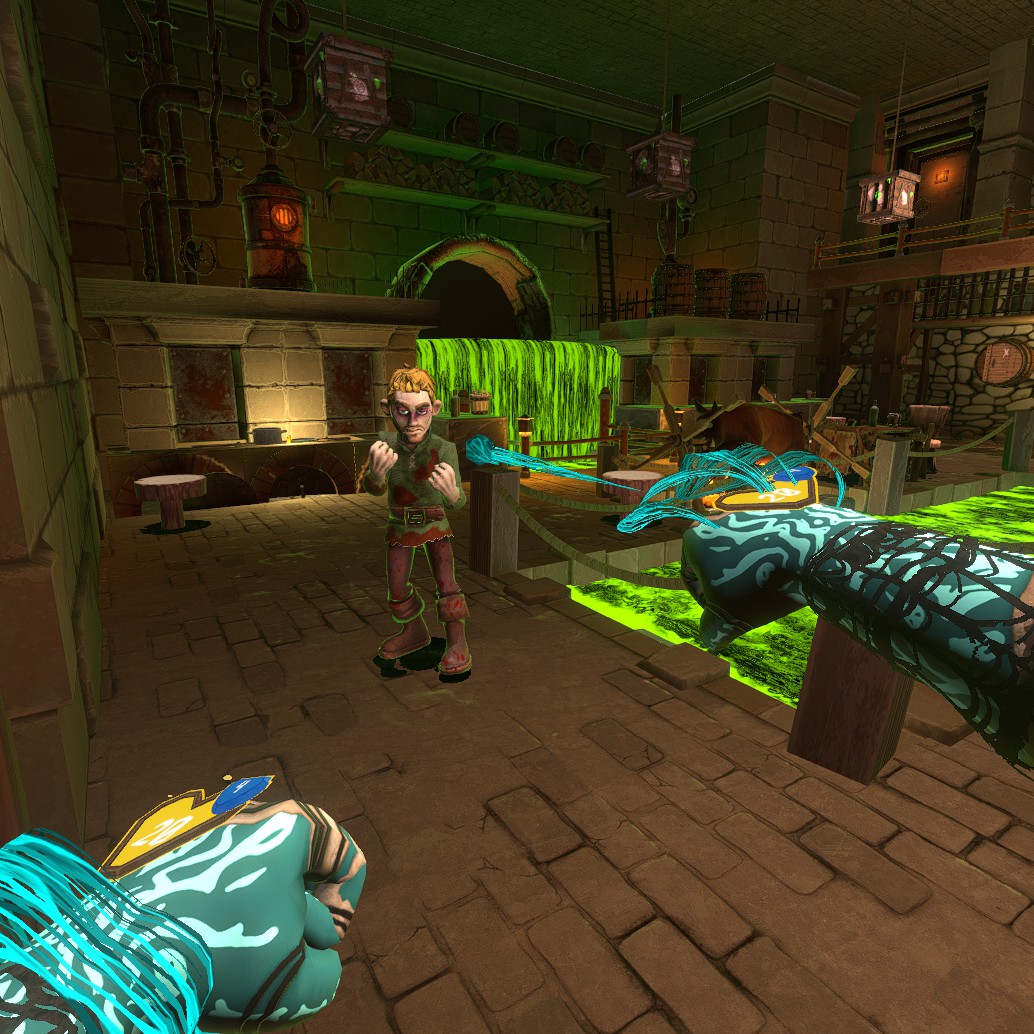
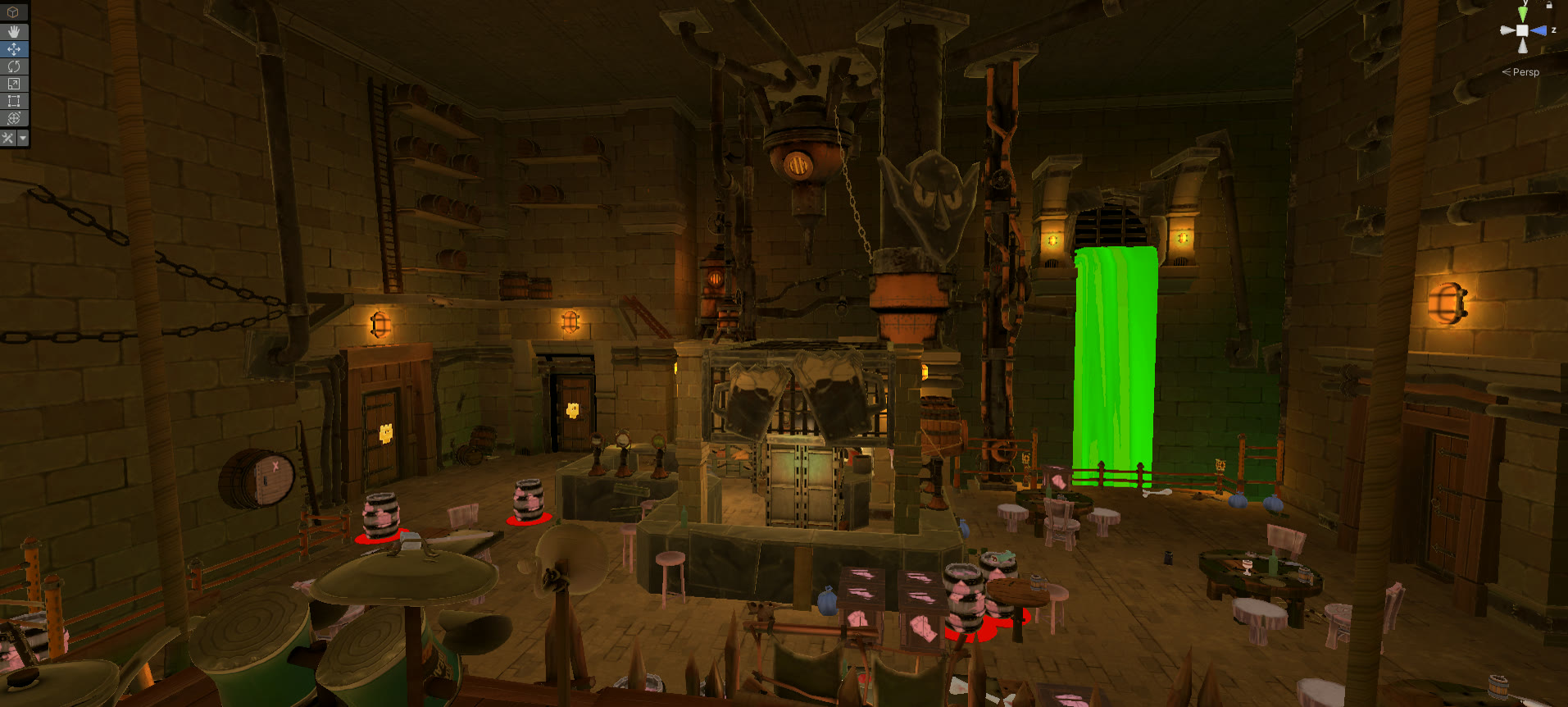
Each level had to be designed around a single mechanic and put it on display. Two examples I shipped:
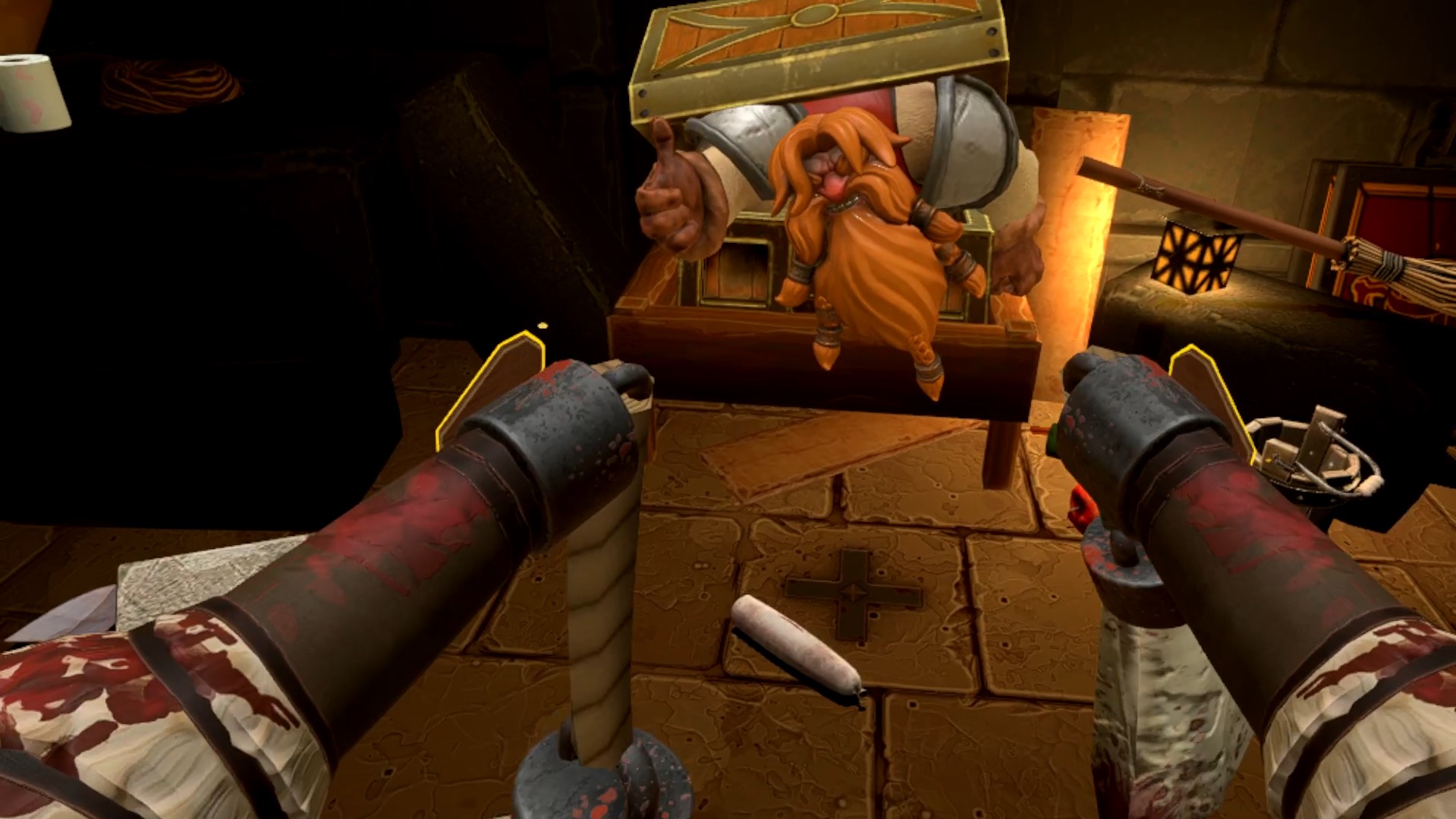
The player can no longer grab anything; pillow-flails replace bare hands as the only weapon. Designed as a deliberate difficulty spike: unlike every other level in the game, players can't pick up items to heal mid-combat. That safety net is gone, which forces more careful positioning and makes every hit costly.
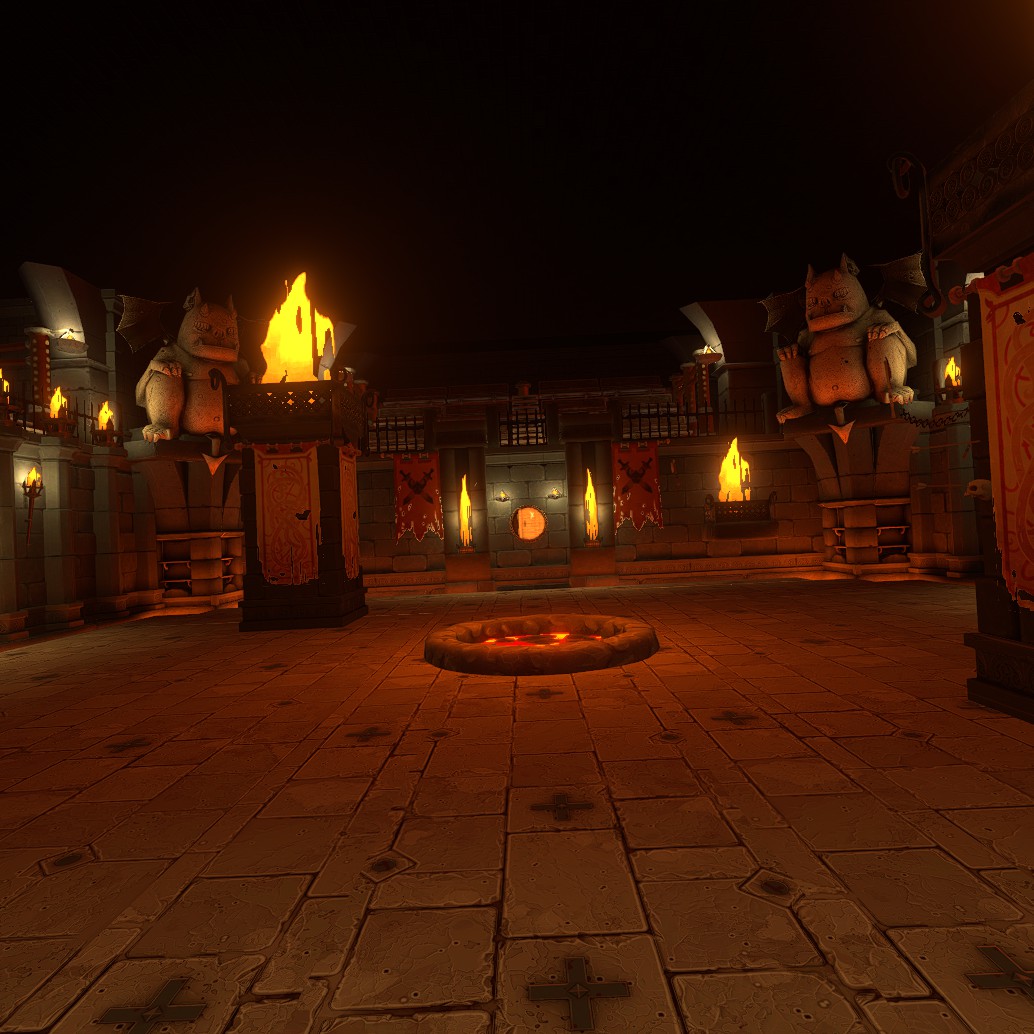
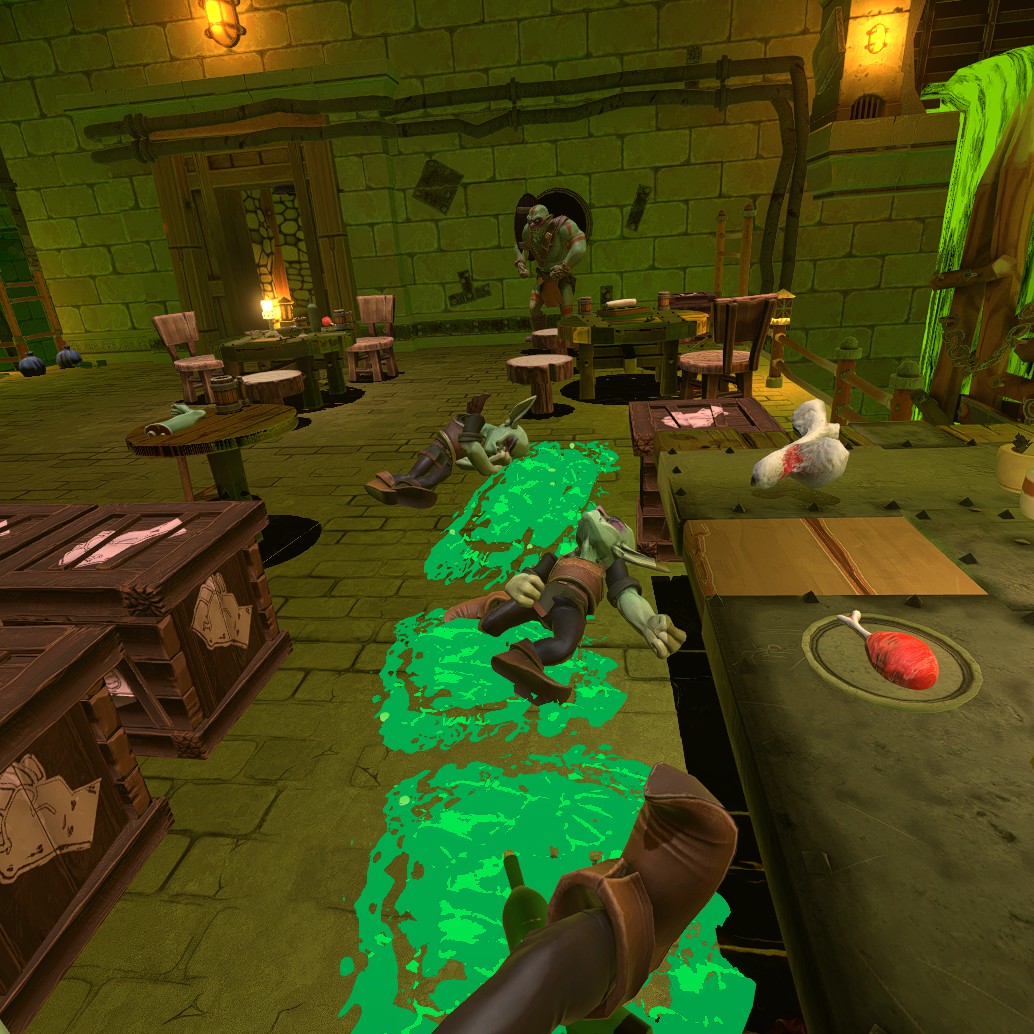
The player leaves a trail of poison every time they dash. The mechanic is taught across two levels:
- Intro level · open layout, used to teach the power and surface a second insight: the dash damages enemies, but also environmental elements like explosive barrels
- Payoff level · labyrinthine layout that puts that understanding into play, with chain-explosion setups built directly into the geometry
Reception & lessons learned
Warmly received on Meta Quest, combat and immersion broadly praised. More mixed on Steam, for two combined reasons: price not adjusted after the rescope, and PC VR players expecting more than what the Quest hardware baseline allowed at that price point.
- Combat game feel, praised by the majority
- Voice acting, frequently called out positively
- Influencer-driven traffic, strong communication reach
- Overall project positioning on PC VR
- Price/scope misalignment post-rescope
- Early-game friction reducing first-impression conversion
Post-launch strategy
Once the game was live, I led a structured analysis across three sources: in-game analytics, influencer conversations, and player reviews. Feedback was categorized into ~10 domains (controls, combat, narrative framing, UX, level design, enemy variety, and others). Findings directly fed a major post-launch update and the upcoming PlayStation 5 version.
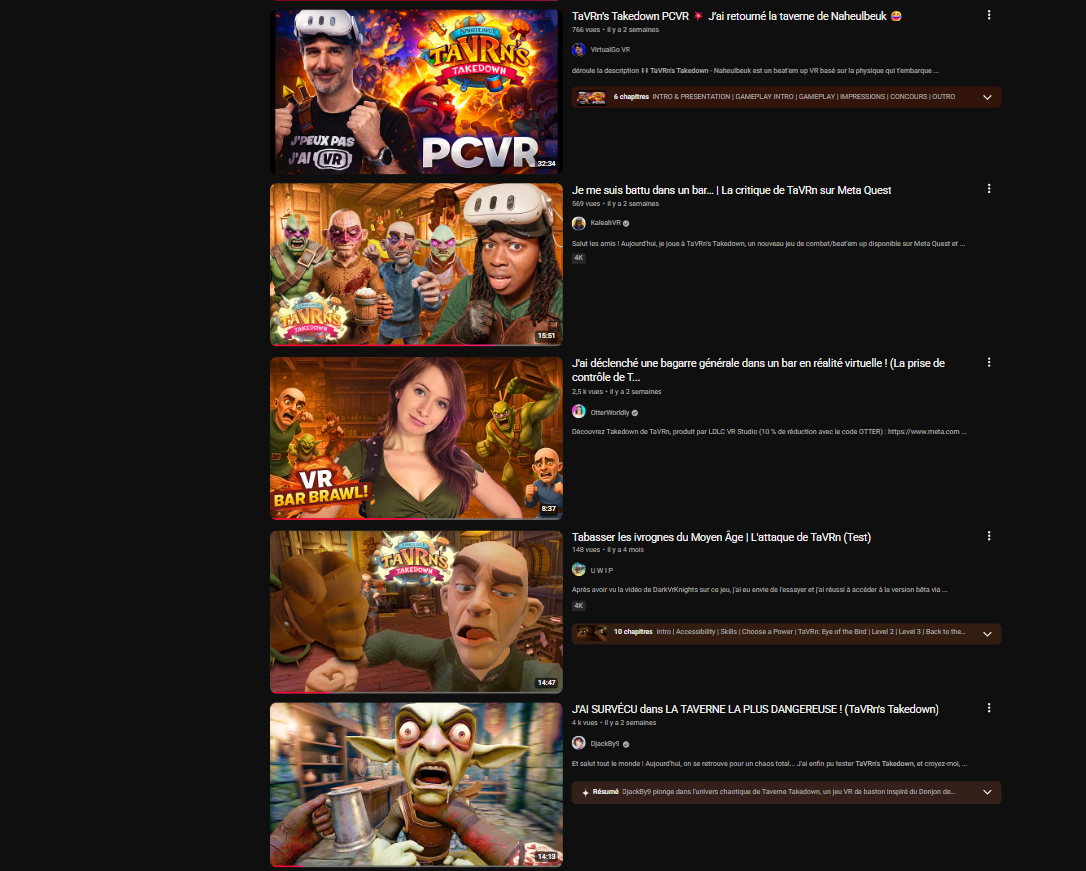
Community video coverage was a significant data source alongside analytics. Watching players navigate the game unfiltered, with no team member in the room, surfaces blind spots that playtests rarely catch: real friction points, unscripted moments of confusion, genuine reactions to narrative beats.
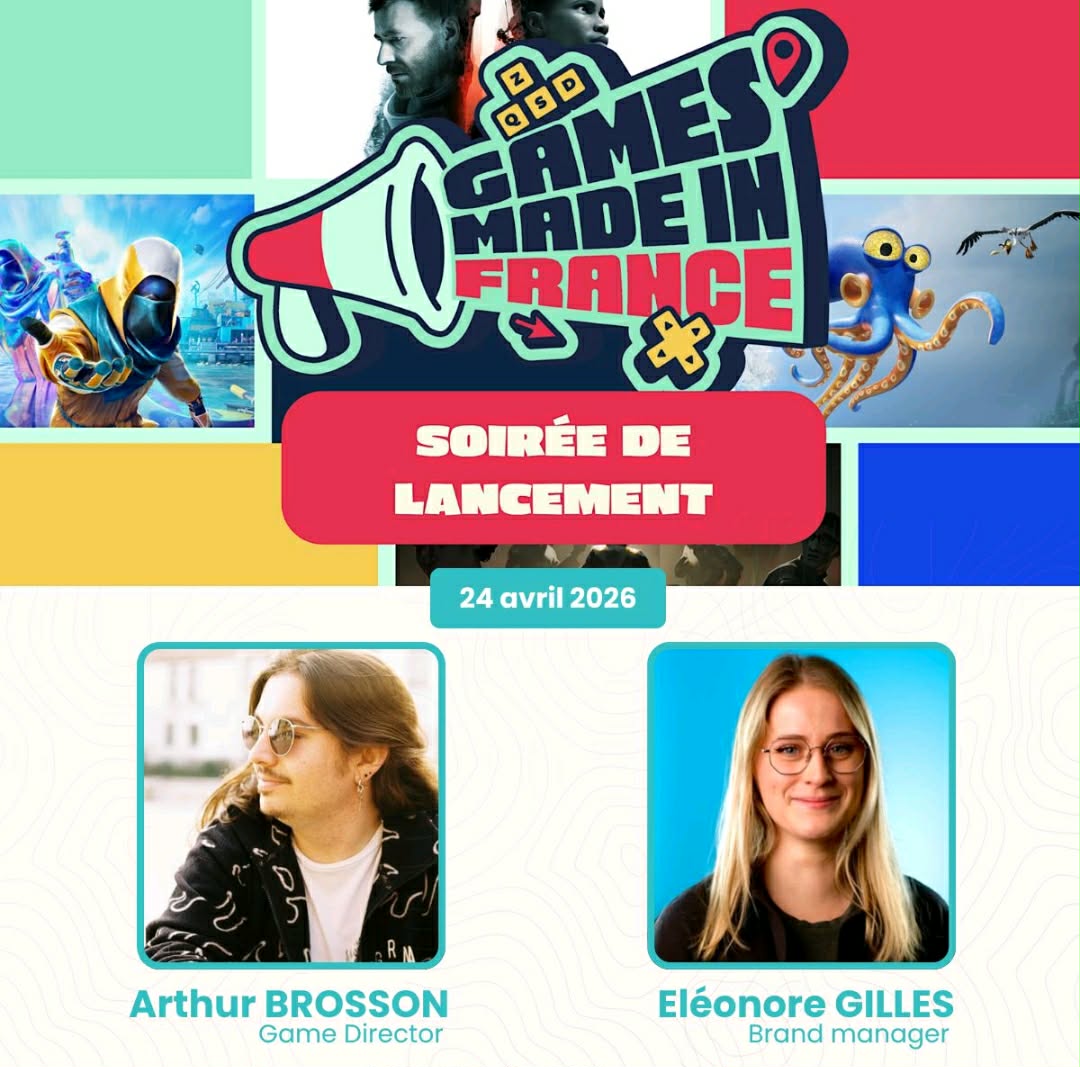
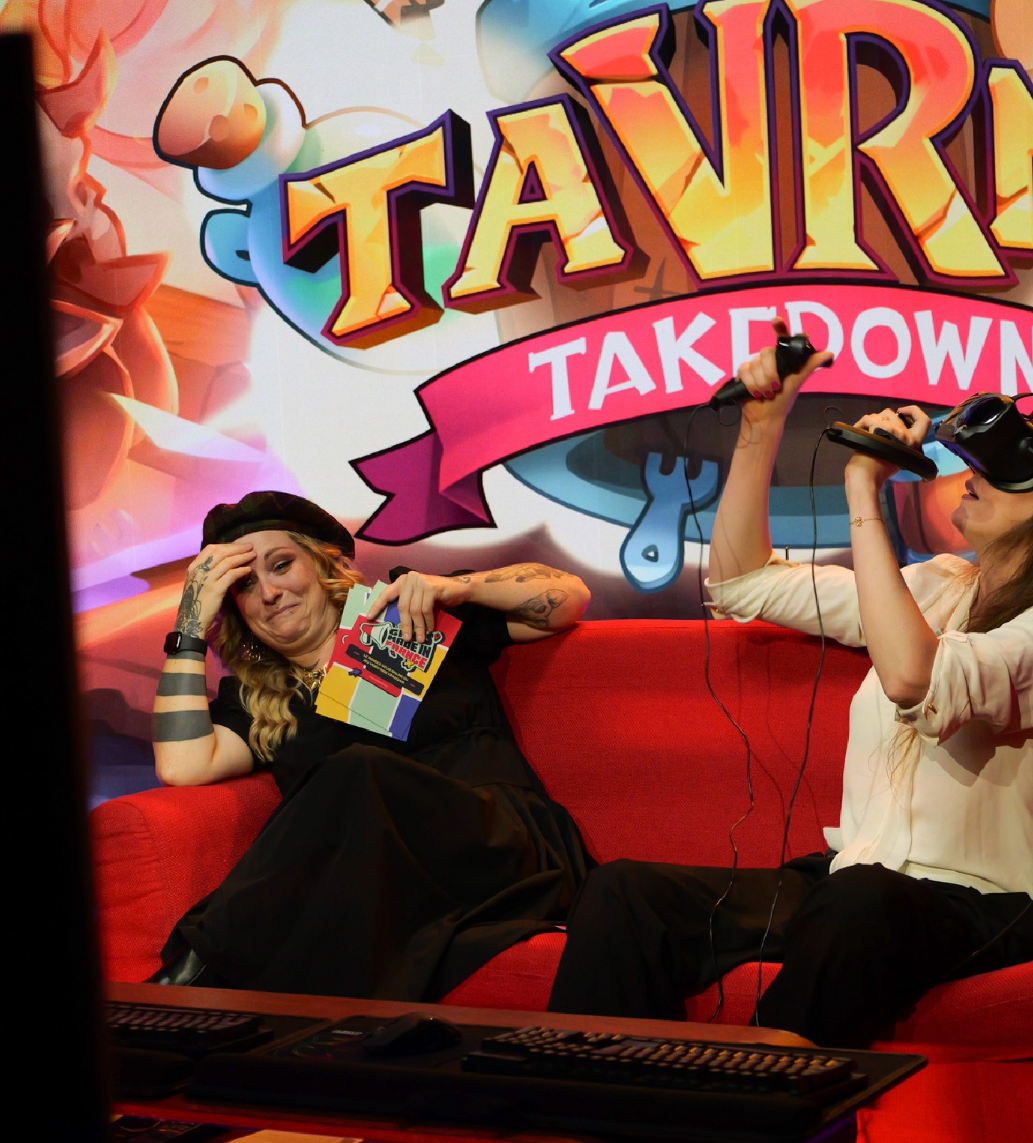
I also presented the project at the Game Made In France event to engage with potential publishing and platform partners. For me, release is the start of the next iteration loop, not the end of the project.
Voice cast & localization
International-first strategy shaped a premium cast on both languages, with dedicated voice directors: Ryan Highley (Dofus, Road 96, Haven) for English and Gregory Laisné (Re:Zero) for French. Naheulbeuk's humor doesn't translate literally: translators were briefed to rewrite jokes, not translate them, across 9 written languages.
I took part in the recording sessions in both languages. My job there was to bring the game into the studio: briefing each voice director, Gregory for French and Ryan for English, on context, character intent and in-game situation for each scene, giving them directorial notes between takes, and answering the cast's questions on specific lines. Performance direction stayed with them; my role was to make sure it served the game.
The franchise began as a French audio series, so we recorded French first. For once, the French performance set the tone and rhythm, and the English cast adapted to it rather than leading. A natural choice for Naheulbeuk, an unusual one for a game.
- Luke Dale · Hans Capon in Kingdom Come: Deliverance II
- Terrence Stone · Hearthstone Tavernkeeper
- Tracy Wiles, Tim Downie, Andrew Wincott · Baldur's Gate 3
- Corin Nemec · Stargate SG-1, Parker Lewis Can't Lose
- Brigitte Lecordier · Goku, Gohan, Goten & Trunks in Dragon Ball
- Cécile Corbel · composer of Studio Ghibli's Arrietty soundtrack
- Caroline Pascal · Demetra in Kaamelott
- Eva Porée · D&Drags, La Bonne Auberge
Game writing
In the second half of production, I stepped in to support the writing team where the workload required it. As with level design, I wasn't the lead writer: that ownership stayed with our narrative designer, and my role was to lend a hand where it counted.
- Drafted dialogues and cinematic beats in collaboration with all relevant teams, checking integration feasibility and overall coherence with the rest of the game
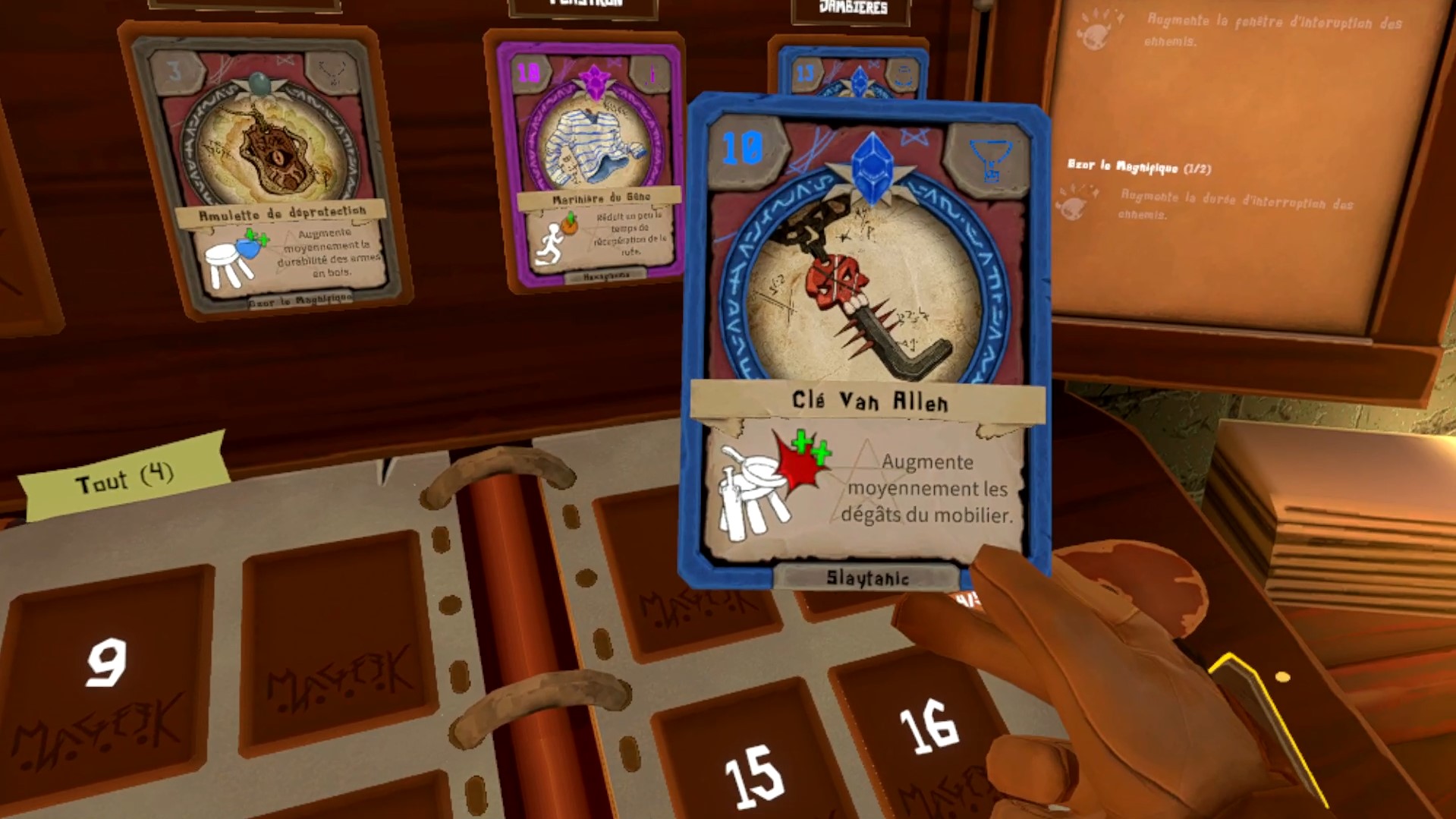
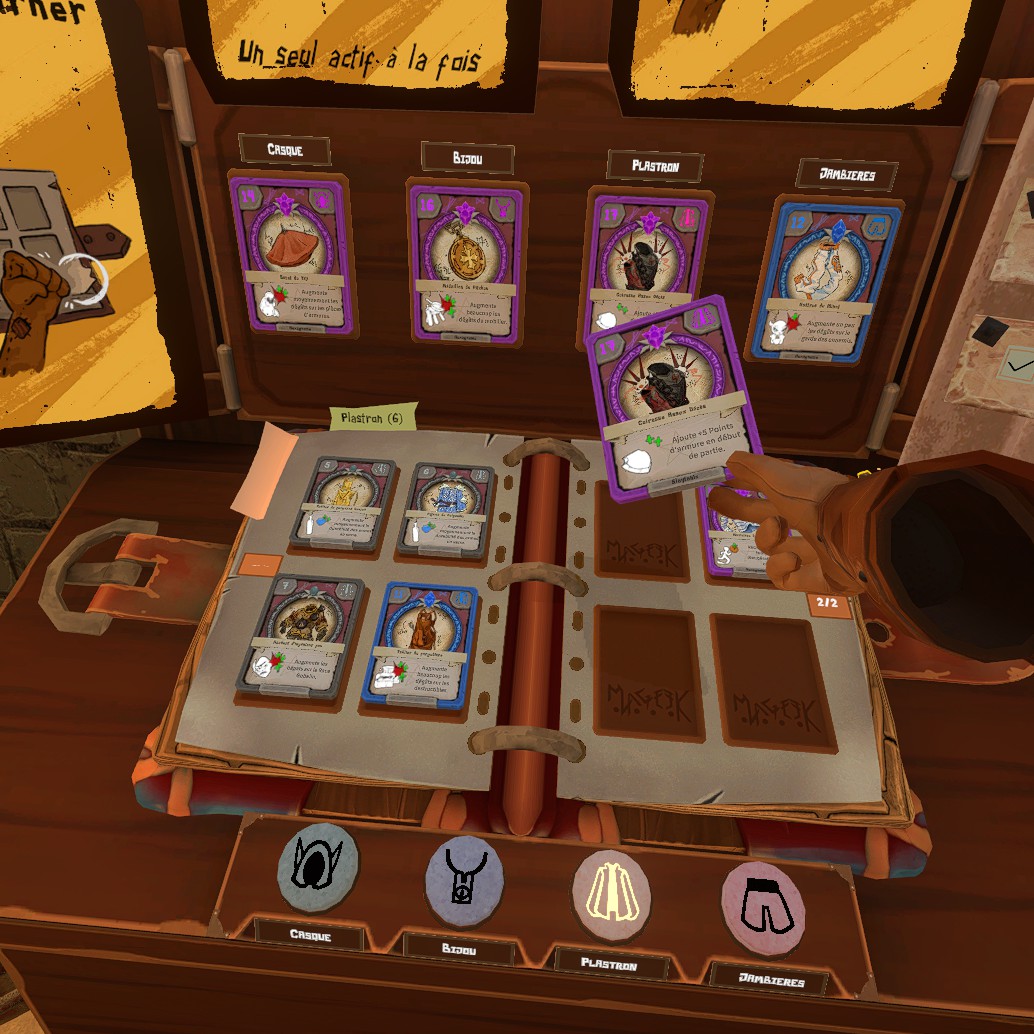
- Wrote equipment names and descriptions for the full gear catalogue: weapons, tools, and wearables, each in a tone consistent with the universe's humor across all 9 written languages
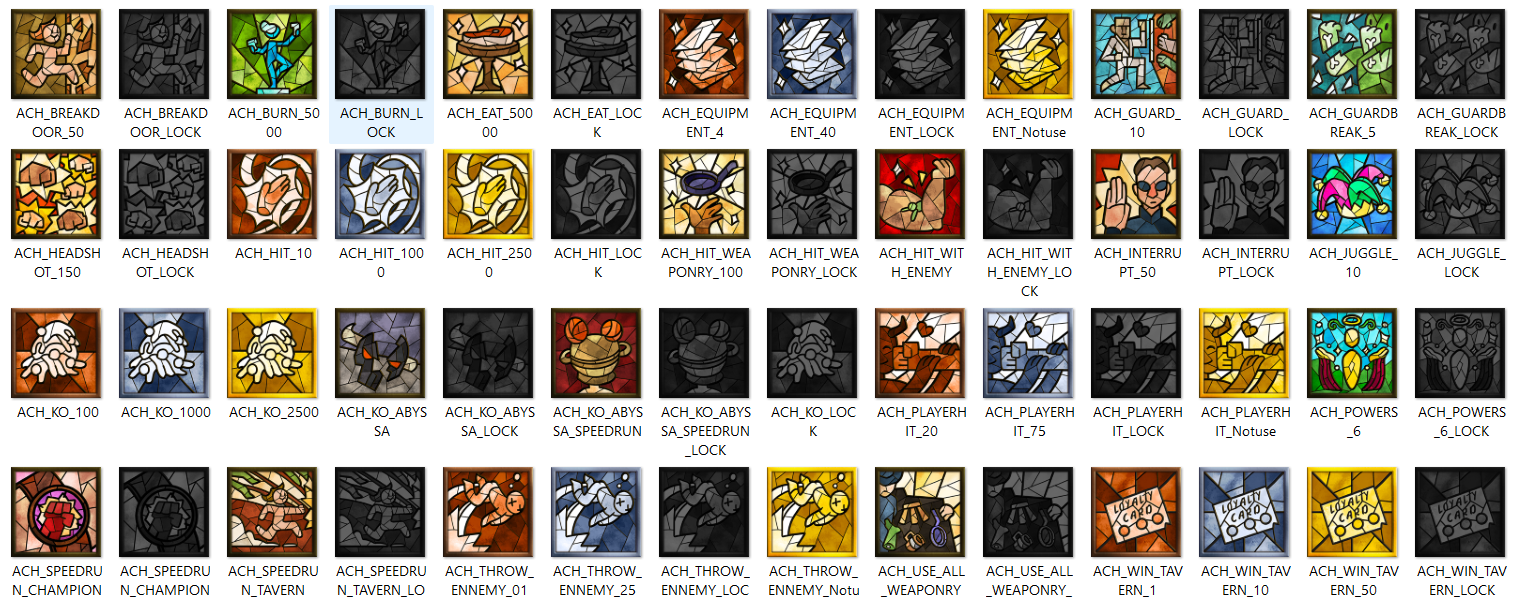
- Wrote the achievement library: names, unlock conditions, and descriptions, coordinated with design and engineering teams
- Coordinated localization across 9 languages: reviewed translations and oversaw their integration into the game
- Iterated on narrative and dialogue fixes triggered by player feedback after launch
Naheulbeuk Fest · launch concert
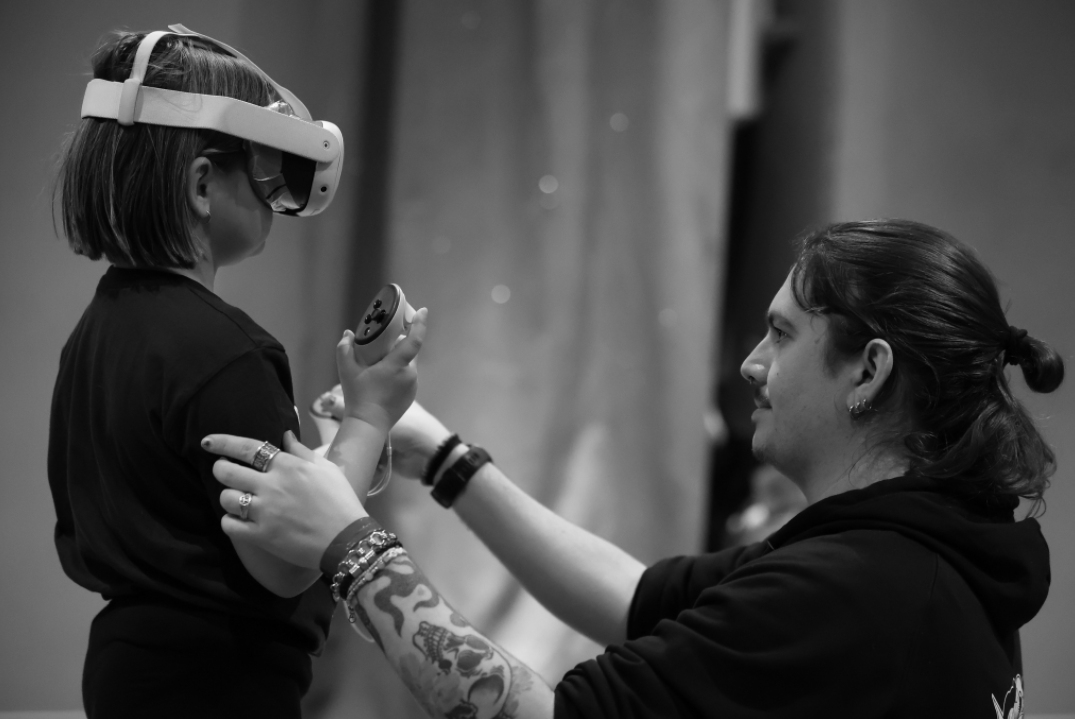
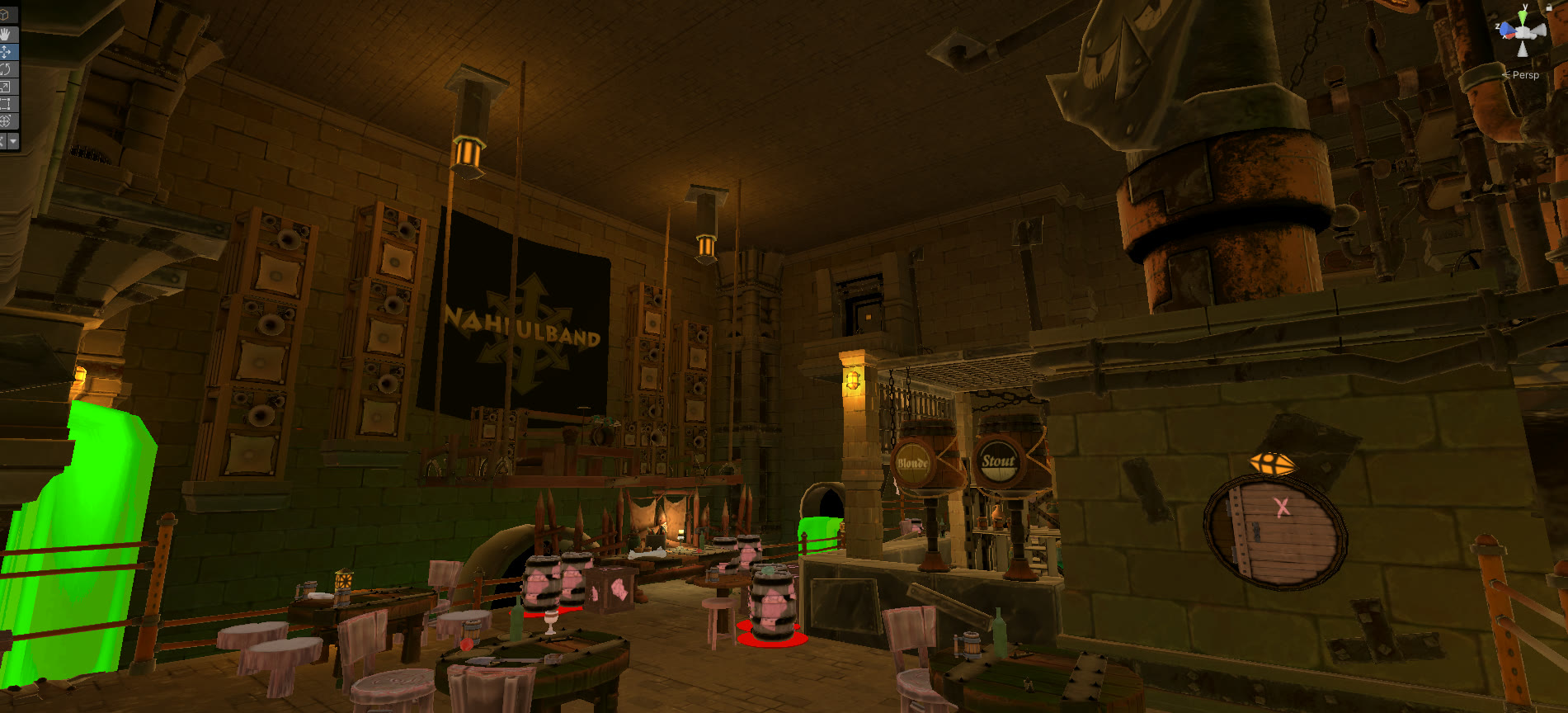
To celebrate the game's release, I helped organize a dedicated launch concert featuring NaheulBand, Magoyond, and Cécile Corbel on stage. On the day, I was on-site running the play-test setup: letting attendees try the game live, gathering their first-hand reactions, and collecting early feedback in person.
Running live playtests at the concert meant being face to face with players of all ages in a single afternoon: kids discovering the universe for the first time, longtime Naheulbeuk fans, people who had never touched a VR headset. As a game creator, it marks you differently than any analytics dashboard. You read confusion on someone's face before they can articulate it, and you feel the precise moment a mechanic clicks. It was one of the most formative days of the whole production.