RUNE TALES: UNDERGROUND
Sequel to Rune Tales: The Citadel. After the events of the first opus, the city lies partly destroyed; players are trapped in the underground passages beneath, chasing the sorcerer Raistlin before he seizes a treasure that would bring the tunnels down. High fantasy, co-op, accessible 12+, in a 25 to 30 minute arcade session. Two studio directives framed the sequel: extend the Citadel formula into a longer session format, and ground the high-fantasy underground in the real architecture of Lyon's historical tunnel network. Six sequenced zones, three runes to break, three mini-boss encounters, and a final boss fight.
Lead Game Designer
Underground is the second entry in the Rune Tales series. The studio set two orientations for the sequel: push the co-op session toward a sustained 25-30 minute experience and build a level design language distinct from The Citadel, rooted in the real architecture of Lyon's underground. I designed the game structure from macro to zone level, and led both game design and level design through production.
- Owned the game design vision for the sequel, building on The Citadel while introducing 3-rune progression, mini-boss arc structure, and a dedicated final boss encounter
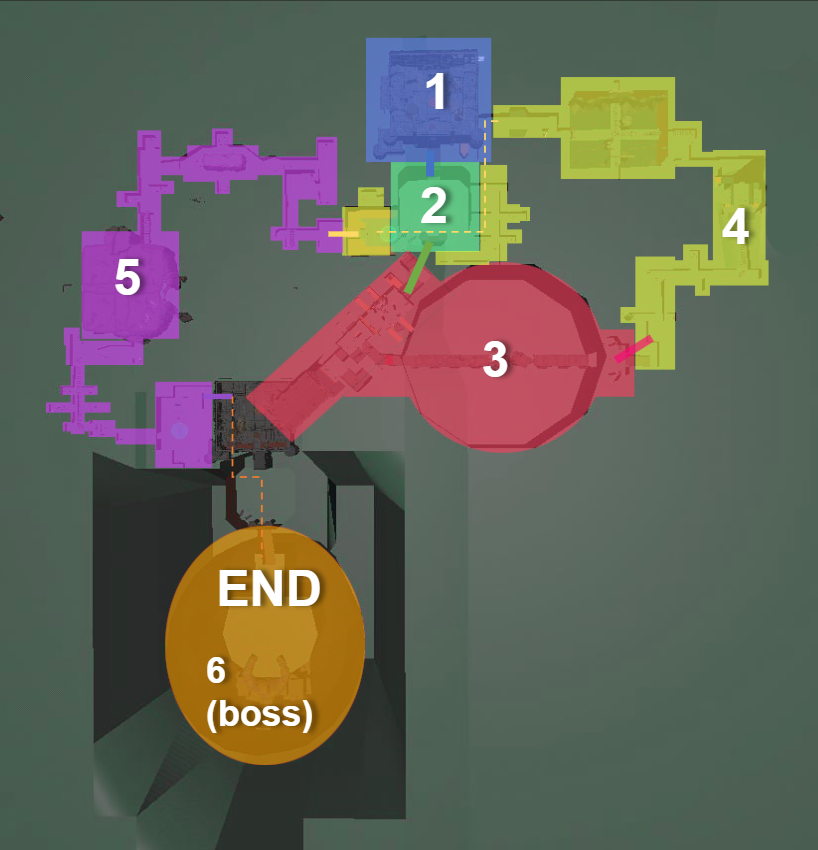
- Defined the macro progression structure: 6 sequenced zones, 3 runes to break across zones 3/4/5, escalating mini-boss encounters, final boss in zone 6
- Owned player onboarding for arcade walk-in audiences (12+, often first-time VR users): the first two zones carry all spatial orientation before combat begins
- Cross-disciplinary coordination with engineering, art, and narrative on a fixed arcade pacing budget of 25-30 minutes
- Direction and mentoring of 1 designer across game design and level design
- Drove playtest iteration with arcade venue audiences throughout production
Lead Level Designer
On Underground, I held both the global LD direction (intent, pacing, zone coherence across the 6-zone map) and the end-to-end design of 4 zones out of 6: the Survivors' Camp (zone 1), the Boss Door Chamber (zone 2), the Underground Catacombs (zone 3), and the Final Boss Room (zone 6). These four zones cover the full opening and closing arc of the player journey. On each of them, my scope ran from paper layout through staging, final dressing, and lighting intentions.
The level geometry was assembled from a modular set design library: a constrained tile system that enabled visual variety across 6 distinct zones while keeping asset production within the budget of a short production cycle. The level design work was grounded in documentary research: the studio brief to transpose Lyon's underground architecture into a high-fantasy context required a deliberate translation of each reference into spatial and atmospheric intent.
The studio directive was to ground the high-fantasy underground in the real architecture of Lyon's historical tunnel network. I led the documentary research and translated each reference site into a concrete level design intent.
- Fishbone tunnel intersections (arêtes de poisson): labyrinthine room layouts that generate apprehension and surprise on player entry, used throughout zones 3 and 4
- Saint-Clair water treatment basins: the flooded mine area (zone 4), a high-ceiling open space that contrasts with the preceding narrow corridors and lets players breathe
The reference threads through the game at a diffuse level: lighting direction and color grading, vertical level transitions echoing the chimney shafts of fishbone tunnels, the final score room placed inside a church, NPC names and dialogue referencing Lyon's historical periods, and selective asset choices (stonework vestiges, water features, coat-of-arms referencing specific historical eras).
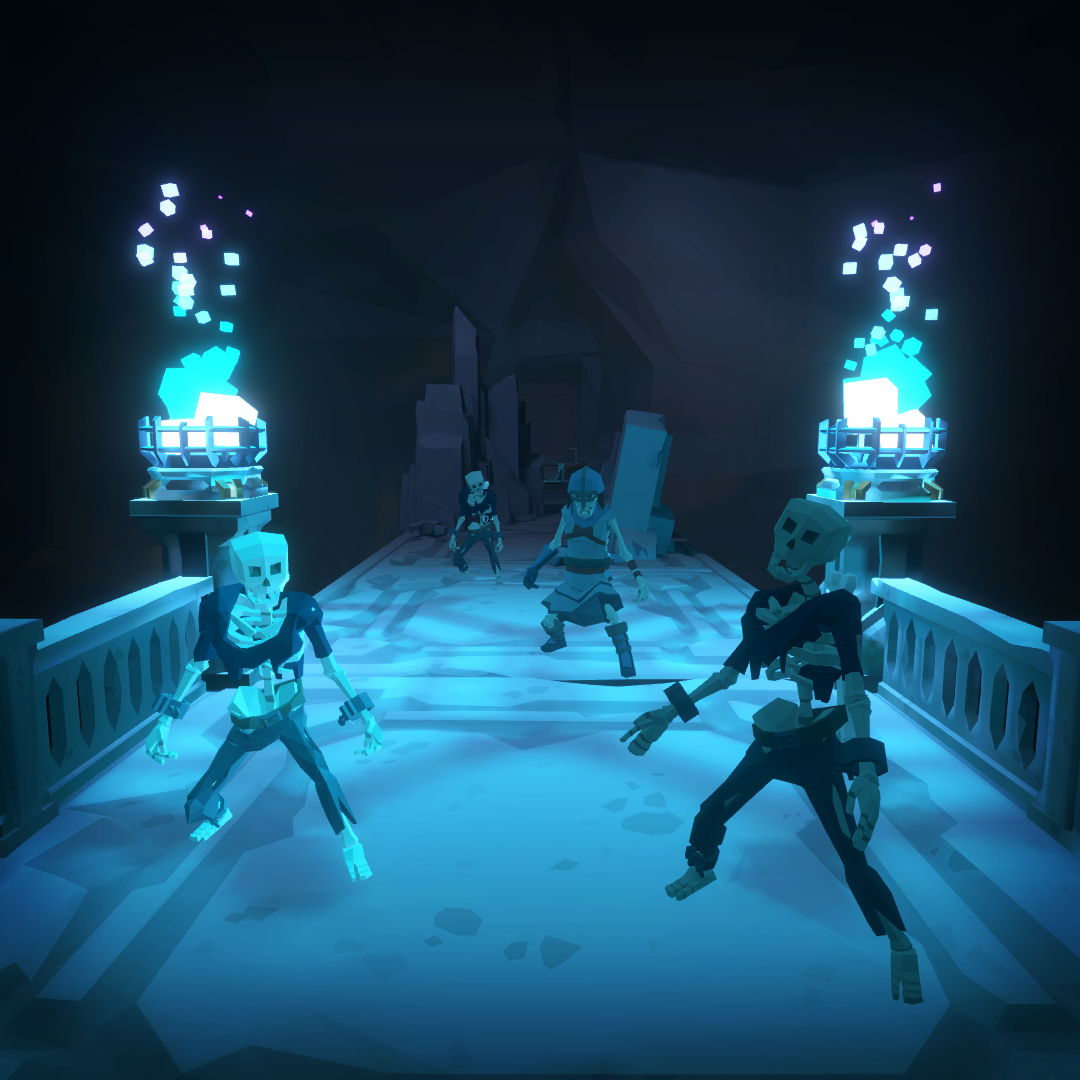
A 25-30 minute session in an underground setting carries a real monotony risk: every environment is by definition enclosed, and visual variety has to be designed deliberately. I structured the macro pacing around contrast of volumes and palette: tight corridors give way to imposing "wow" rooms, which double as enemy encampments to make the volume shift also a combat trigger.
Zone 4 (Flooded Mines) and zone 5 (Natural Cave with bioluminescent crystals) are the two main breathing zones, both visually and rhythmically, placed mid-run when player fatigue begins. Each zone has a distinct color palette and lighting language to signal progression without a UI map. Zone transitions are designed to be felt before they are seen: the change in ceiling height and light color alerts the player that a new space is coming.
The opening zone, where players gather and choose their handle before the timer starts. The design intent is deliberate decompression: low pressure, no combat, time to orient to the VR space. A wall collapses to reveal the underground passage: a single visual cue, no text, no pointer, that signals the session is starting and directs the group forward without instruction.
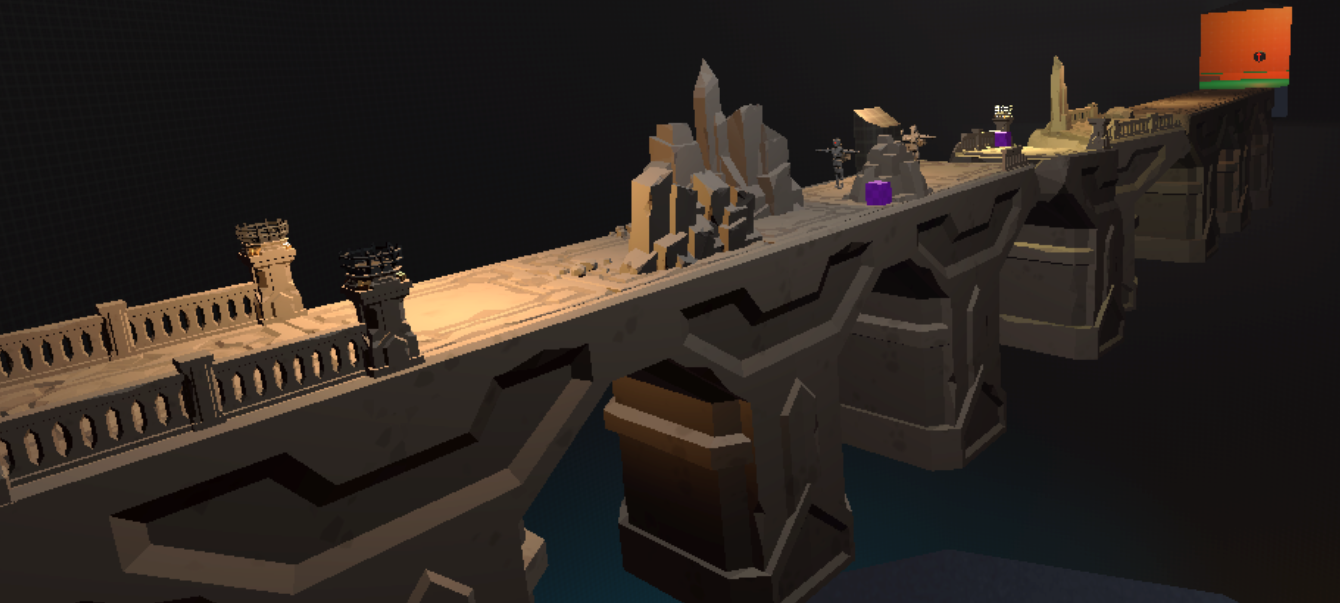
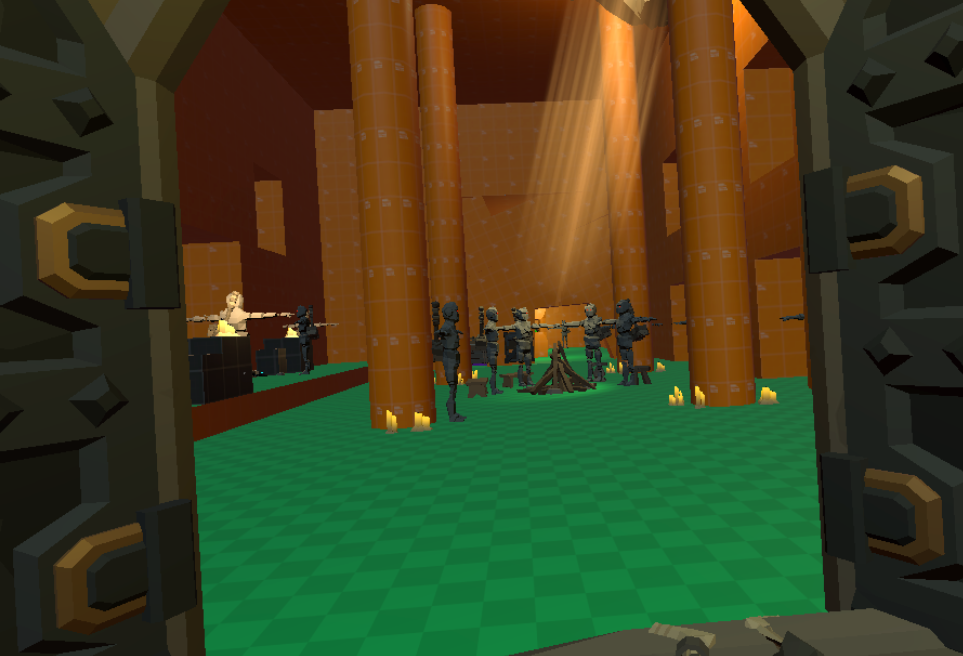
A pure narrative beat: two minutes, no combat. Players enter a room where the final boss door is visible from the moment they walk in. A character explains the stakes. The design intent: show the goal before the journey begins. From this point, every zone the player walks through is geographically and emotionally moving toward that door. The visible endpoint makes the 25-minute run feel purposeful rather than arbitrary.
The first combat zone: first enemies, first rune, first mini-boss. The layout uses a large central room with side corridors at floor level and elevated heights, where enemies can hide and flank. Heavy use of fishbone-intersection geometry: the room rewards players who check their sightlines and punishes those who push forward without looking left. Zone 3 sets the spatial grammar the rest of the run builds on, and is the first test of the group's ability to split and coordinate.
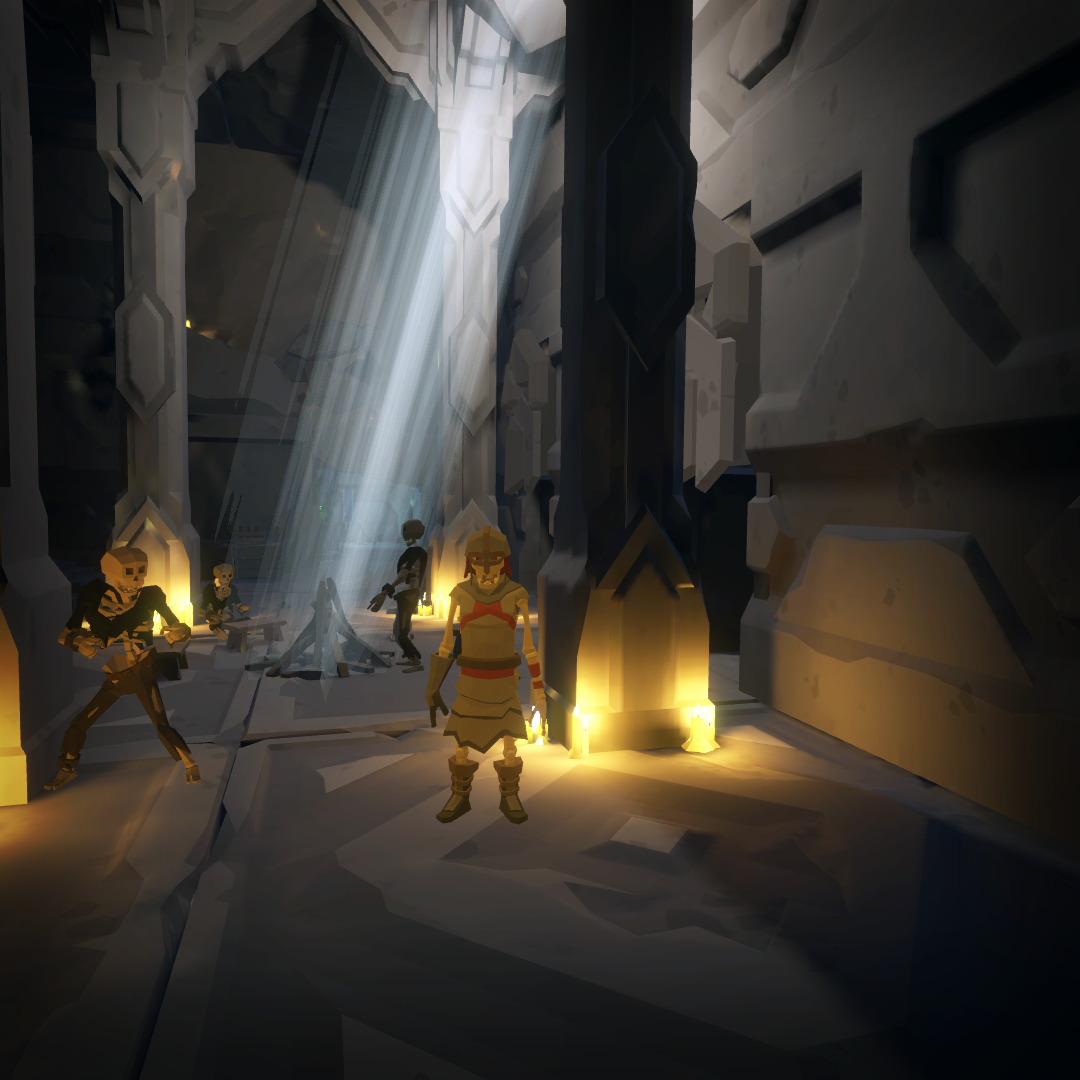
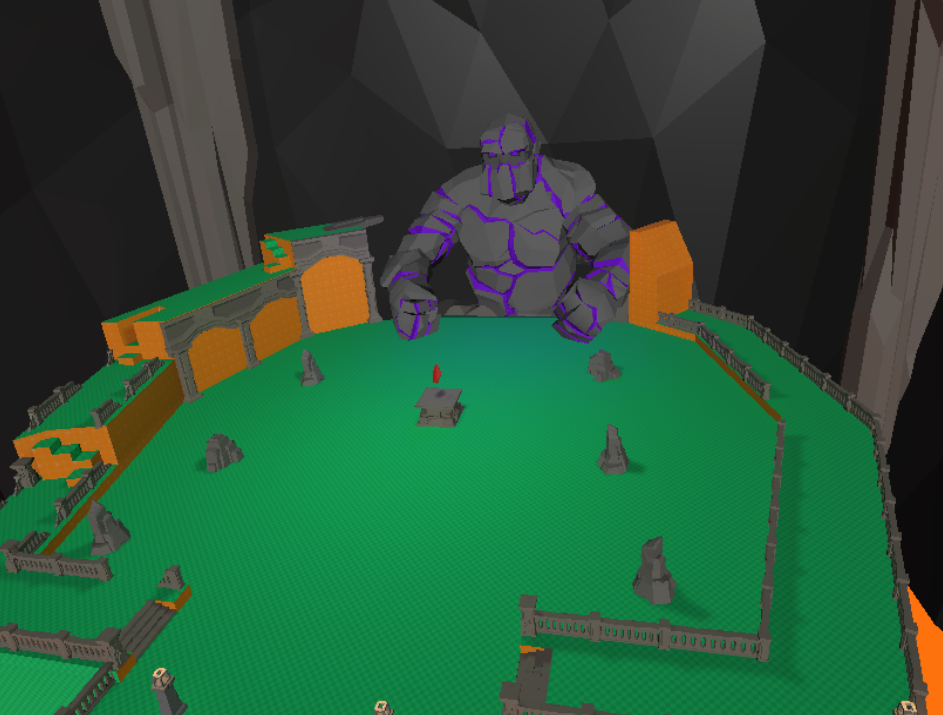
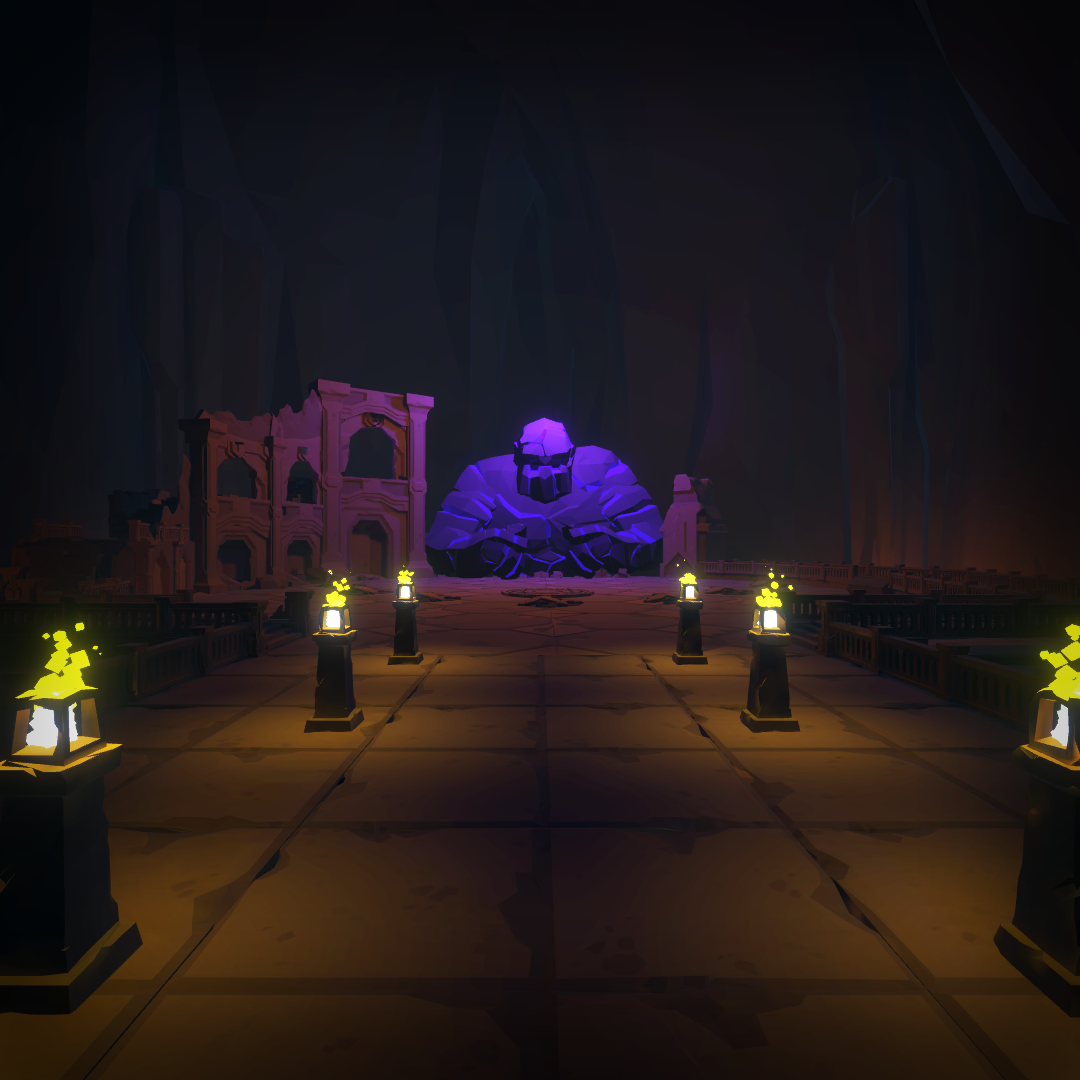
Players climb stairs and re-enter the lobby of zone 1, but the space has shifted: the skeletal remains of the chapter 1 boss, the survivors gone, lighting changed. No text, no prompt: environmental storytelling alone carries the confusion, curiosity, and sense of something wrong. Players advance to the Boss Door, which now opens onto a wide circular arena, readable in a single glance, with no spatial ambiguity left because all combat focus is on the boss. Post-boss, a hidden passage opens to the surface. Players exit into a church serving as the score room, with a window view that teases the next opus.